
Quick answer
Yes. It is normal for a heat pump to leak water outside. In winter the outdoor coil frosts and each defrost cycle melts that frost, which drains through holes in the base pan; in damp weather near freezing that adds up to several litres a day. It is a problem only when the water cannot drain: ice mounding under the unit, blocked drain holes, or meltwater refreezing on a walkway.
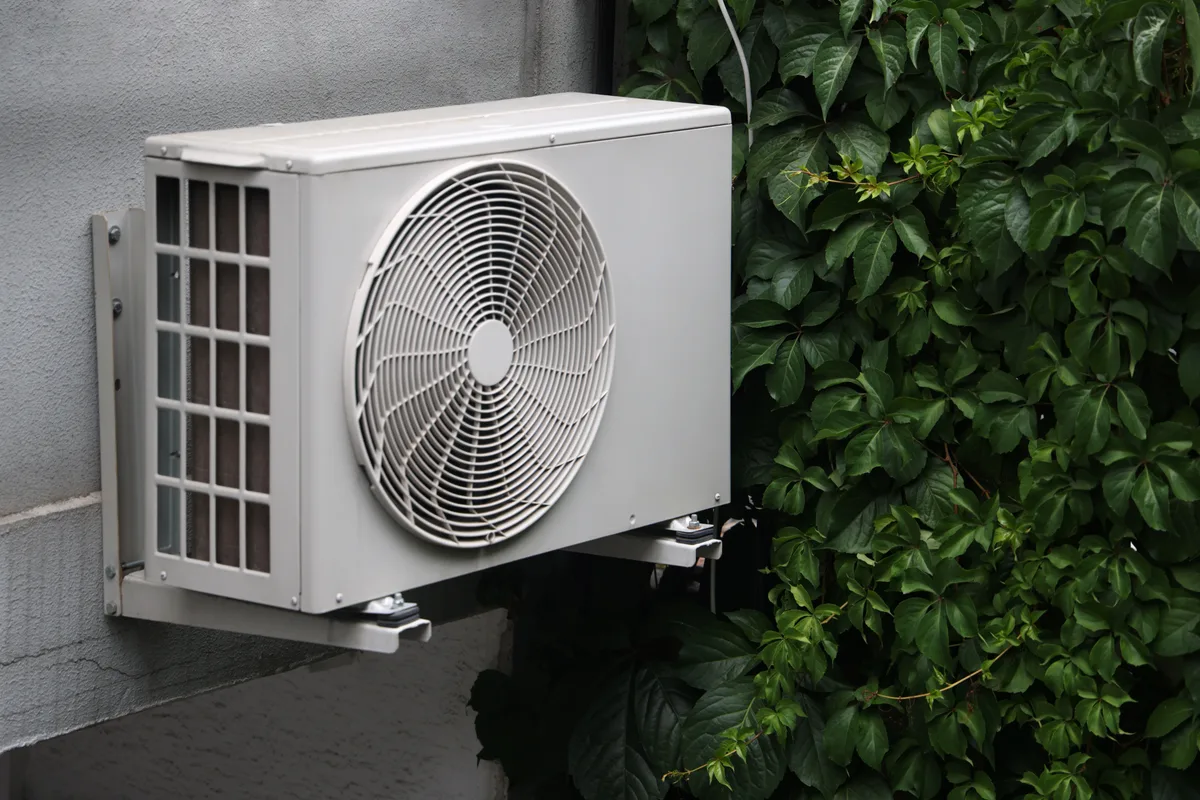
It is normal for your heat pump to leak water outside, and in heating season something would be wrong if it did not. The outdoor coil runs colder than the air around it, so it pulls moisture out of that air as condensation on mild days and as frost on cold ones. Every defrost cycle turns the frost into water, and the base pan is built with holes to let it out.
Where the water comes from, season by season
- Winter, below about 5 °C: defrost meltwater. Expect a gush for a few minutes, steam, then dripping, repeated through the day.
- Fall and spring, in heating mode above freezing: steady condensation dripping off the coil while the unit runs, with no defrost at all.
- Summer, ductless systems: the water is condensate from the indoor head, carried outside by a drain hose that usually ends beside the outdoor unit. The outdoor unit itself is hot and dry in cooling mode.
- Summer, ducted systems: condensate drains indoors, at the coil above the furnace or air handler, to a floor drain. A puddle under the outdoor unit in July is rain, or it is not water.
How much depends on humidity more than on cold. The heaviest drainage comes in damp air around the freezing mark, which is common near Lake Ontario, and several litres over a day is ordinary. In dry air at −15 °C the same unit barely drips.
Signs the drainage has become a problem
- An ice mound growing under the unit: once it reaches the base pan it plugs the drain holes from below, and the next defrost has nowhere to send its water.
- Standing water or ice in the base pan: the holes are blocked by leaves, seed fluff or grit. Ice in the pan climbs into the bottom of the coil and bends the fins and tubes.
- Water refreezing across a walkway, steps or driveway: the equipment is fine, but the slip hazard is real and it returns every cold night.
- Water running toward the foundation wall or pooling against it.
- An oily film where the drip lands: water leaves no residue. Oil means refrigerant is escaping, and that is a repair call.
Ice that keeps building on the coil itself is a separate fault in the defrost system; how to defrost a frozen heat pump explains what to do and what to leave alone.
Check this yourself first
- Clear the drain holes: with the unit off at the disconnect, look into the base pan and clear debris from the holes with a gloved finger or a plastic zip tie, not a screwdriver.
- Break up the ice underneath: chip the mound on the ground, never ice attached to the unit, so there is open air below the pan.
- Check the eavestrough above: a leaking or overflowing gutter adds water the unit was never meant to handle.
- Find the mini-split drain hose in summer: it should drip freely outdoors, with its end in open air and not buried in mulch.
Fixes: a stand, a base-pan heater and better drain routing
Raise the unit. A heat pump mounted on a stand, high enough to sit above the usual snow depth with open space underneath, lets meltwater fall away and freeze on the ground instead of in the pan. A unit sitting on a slab at grade is the installation most likely to ice from below, and a heat pump that replaced an air conditioner often inherits the old low pad.
Add or repair the base-pan heater. Many cold-climate models ship with an electric heater in the pan that keeps the drain holes open through defrost, and others accept one as an accessory. If the pan on a cold-climate unit is icing, that heater or its control is the first thing to test.
Route the water, not just the unit. In a freezing climate the snap-in drain fitting and hose that come in the box are left off, because manufacturers warn that the hose freezes and backs water into the pan. The reliable answer is where the water lands: a gravel bed that lets it soak away, grade that slopes away from the foundation, and a location clear of the walkway. If the unit drips onto a path, moving it a metre or two solves what no amount of salt will.
What drainage fixes cost, and when to call
Clearing drain holes is free, and a seasonal check is part of heat pump maintenance. A visit to diagnose a pan that keeps icing is $90–$150, credited toward the fix. A stand, a base-pan heater or a short relocation is quoted in writing, because the price depends on the model, the line-set length and whether refrigerant has to be recovered to move the unit.
Call promptly for an oily leak, for ice that has reached the coil, or for meltwater getting into the basement. Everything else on this page can wait for a regular appointment. ZK Mechanical's heat pump repair visits cover drainage and defrost faults from Burlington to the Hamilton Mountain and west Toronto; call (647) 801-1252 or send the details and a photo. More winter questions are answered in the heat pump topic hub.