
Quick answer
No. Ontario's Residential Tenancies Act does not list air conditioning as a vital service, so a landlord has to provide it only when the lease includes it, and must then keep it working. In Toronto, AC that a landlord supplies must hold the unit at 26 °C or lower from June 1 to September 30. Tenants may install a window or portable unit under set conditions.
A landlord does not have to provide air conditioning in Ontario unless the tenancy agreement includes it. The Residential Tenancies Act treats heat as a vital service and cooling as an optional one. Once AC is part of what you rent, though, the landlord has to keep it working, and some cities set the temperature it must hold.
What the Residential Tenancies Act says about air conditioning
Air conditioning is not a vital service under the Residential Tenancies Act. The Act's list of vital services is hot or cold water, fuel, electricity, gas and, during the heating season, heat. A landlord cannot cut those off, and the heating rules are explained in what temperature a landlord must keep a rental.
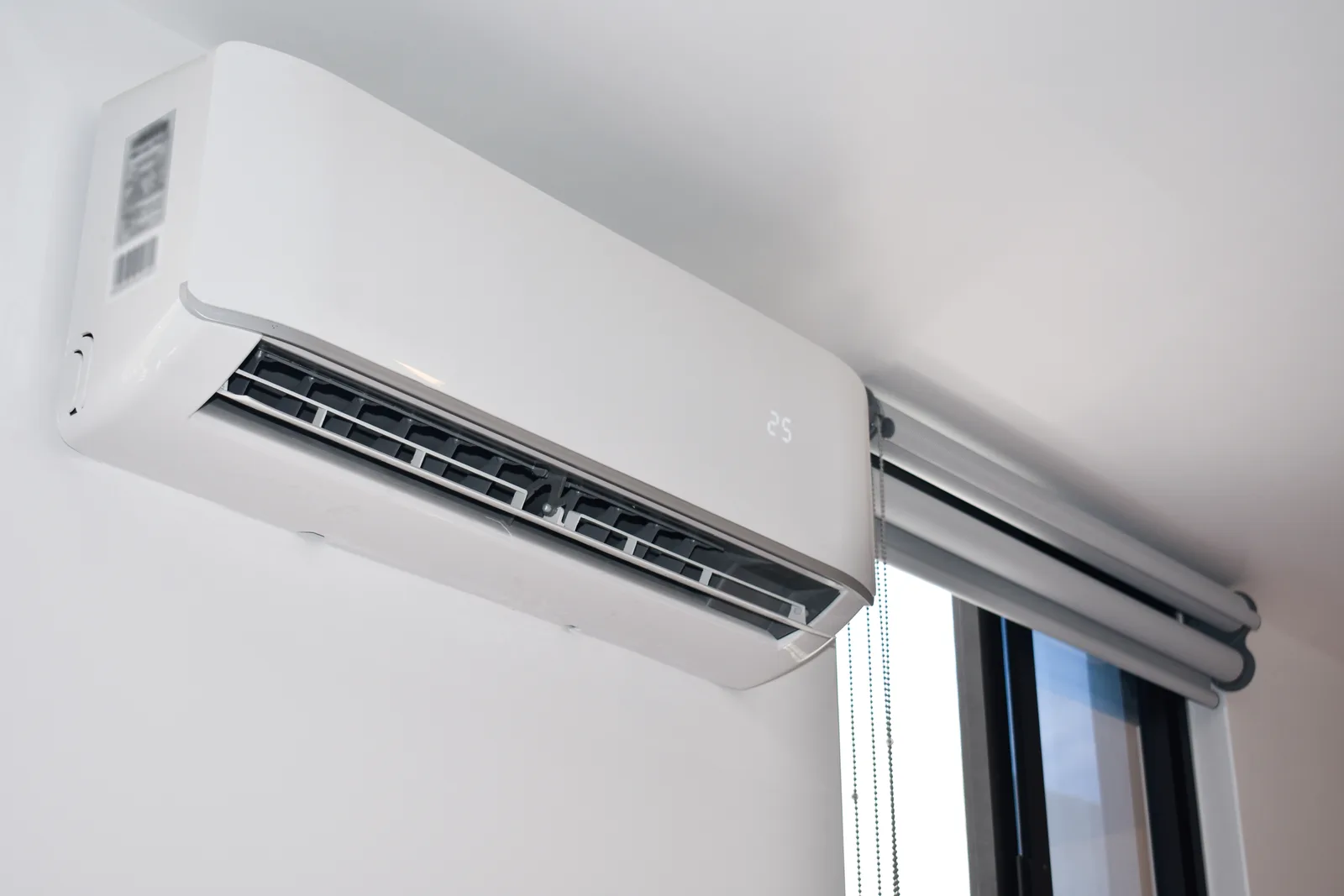
Cooling becomes an obligation through the lease. If the unit came with central air, a ductless head or a landlord-supplied window unit, or the lease lists AC as included, it is a service the landlord must maintain in good repair and cannot withdraw unilaterally. A tenant whose included AC is not repaired can apply to the Landlord and Tenant Board. If the lease is silent and the unit never had cooling, the landlord has no duty to add it.
Municipal rules where AC is provided: Toronto's 26 °C standard
Cities add their own standards on top of the provincial Act, and Toronto's is the clearest. Where a landlord provides air conditioning, it must be operated from June 1 to September 30 to keep the unit at no more than 26 °C. As of June 1, 2026 that requirement sits in Toronto's Indoor Temperature Standards Bylaw, the renamed Heating Bylaw. Older summaries quote June 2 to September 14, which was the previous window.
Toronto does not require an owner to install cooling where none exists, and it does not regulate the temperature of units that have no AC. One newer rule applies to apartment buildings in the RentSafeTO program that do not cool every unit: if the building has an indoor amenity space, that space must stay at or below 26 °C over the same dates.
Other municipalities differ. Mississauga has an adequate temperature by-law of its own that covers air conditioning where it is supplied, and Hamilton, Burlington, Oakville and Brampton deal with rental conditions through their property standards by-laws. Dates and limits vary, so confirm with your city's by-law office before relying on a number.
Tenant-installed window and portable air conditioners
Where the landlord does not provide AC, a tenant may install a window or portable unit under the 2023 amendments to the Act (Bill 97), subject to conditions. Ontario's guide for renters sets them out:
- Notify the landlord in writing before installing the air conditioner.
- Install and operate it safely and securely, without damaging the property.
- Follow applicable laws, including municipal by-laws.
- If the landlord pays for electricity, give the landlord the unit's energy-efficiency information and how much you expect to use it. The landlord may then charge a seasonal rent increase based on the actual electricity cost or a reasonable estimate.
A few points from the equipment side. A window unit needs a bracket or sill support and a slight outward tilt, so condensate drips outside and not down the wall. A portable unit needs its exhaust hose sealed into the window kit, and it cools less than a window unit of the same rated size. This page is a contractor's summary, not legal advice; a community legal clinic or the Landlord and Tenant Board is the place to take a dispute.
Landlord options for adding cooling: ductless mini-split or central AC
A landlord who wants to add cooling has two routes, and the building's heating system picks between them. Houses and duplexes with a forced-air furnace can take central AC on the existing ducts. Buildings heated by radiators or electric baseboards, which includes most pre-war brick walk-ups and many 1960s and 70s low-rises, have no ducts. There a ductless mini-split is the fit: one outdoor unit, a wall head for each unit or room, and a three-inch hole through the wall.
- Single-zone ductless, one head: $4,000–$7,000 installed.
- Dual-zone ductless: $7,500–$11,000 installed.
- Central AC where ducts already exist: $3,500–$7,500 installed.
- Annual AC tune-up once the system is in service: $120–$250.
Settle two things before installing. The first is metering: a head wired to the tenant's panel runs on the tenant's hydro account, while a shared furnace and central AC in a duplex means one thermostat and one bill for two households. The second is the obligation: once cooling is included in a tenancy it has to be kept working, and in Toronto it has to hold 26 °C. Our landlord HVAC responsibilities guide covers the wider list.
ZK Mechanical installs and services both kinds of system for landlords and owner-occupiers in Burlington, Oakville, Milton, Hamilton, Mississauga, Brampton, Etobicoke and west Toronto, with a written quote per unit or per building. See air conditioner installation, call (647) 801-1252 or request a quote. Further tenant and landlord cooling questions sit in the cooling answers hub.