
Quick answer
Yes. A heat pump can be installed in winter, and in a house with a working furnace it is typically a one-day job with the heat off for only a few hours. Two things change in the cold: the refrigerant charge is weighed in by line-set length instead of tuned from pressure readings, and the cooling-mode check waits for a spring visit.
A heat pump can be installed in winter in southern Ontario, and the indoor half of the job is identical in January and July. What changes is the refrigerant work and the site work outside. Neither is a reason to wait for spring if your cooling is already dead or your furnace is on its last season, but both are things to ask the installer about before booking.
Refrigerant charge in cold weather: weighed in, not adjusted by pressures
In winter the charge is set by weight. The outdoor unit ships holding enough refrigerant for a stated length of line set, printed in the installation manual; the technician measures the actual run and adds the manufacturer's per-metre amount from a cylinder sitting on a scale. In summer that figure would be fine-tuned from pressure and temperature readings taken in cooling mode, but those charts assume warm outdoor air and mean nothing at −5 °C.
The steps before the charge is released take longer in the cold as well. The lines are pressure-tested with nitrogen, then pulled into a deep vacuum, to 500 microns or lower on a micron gauge, to boil off moisture. Water leaves slowly from cold copper, so the pump runs longer than it would in July. Anyone handling the refrigerant needs an Ozone Depletion Prevention (ODP) card in Ontario.
The cooling-mode check waits until spring
A heat pump installed in January is commissioned in heating mode only. That day's checks are the supply air temperature rise, the amp draw, a forced defrost cycle, and the thermostat's changeover and backup-heat settings. Cooling cannot be tested under a real load until the weather warms, so a spring return visit runs the system in cooling, proves the indoor coil's condensate drain and confirms the charge with readings. Ask for that visit in writing on the quote.
Site work the cold affects: pads, brackets and the snow line
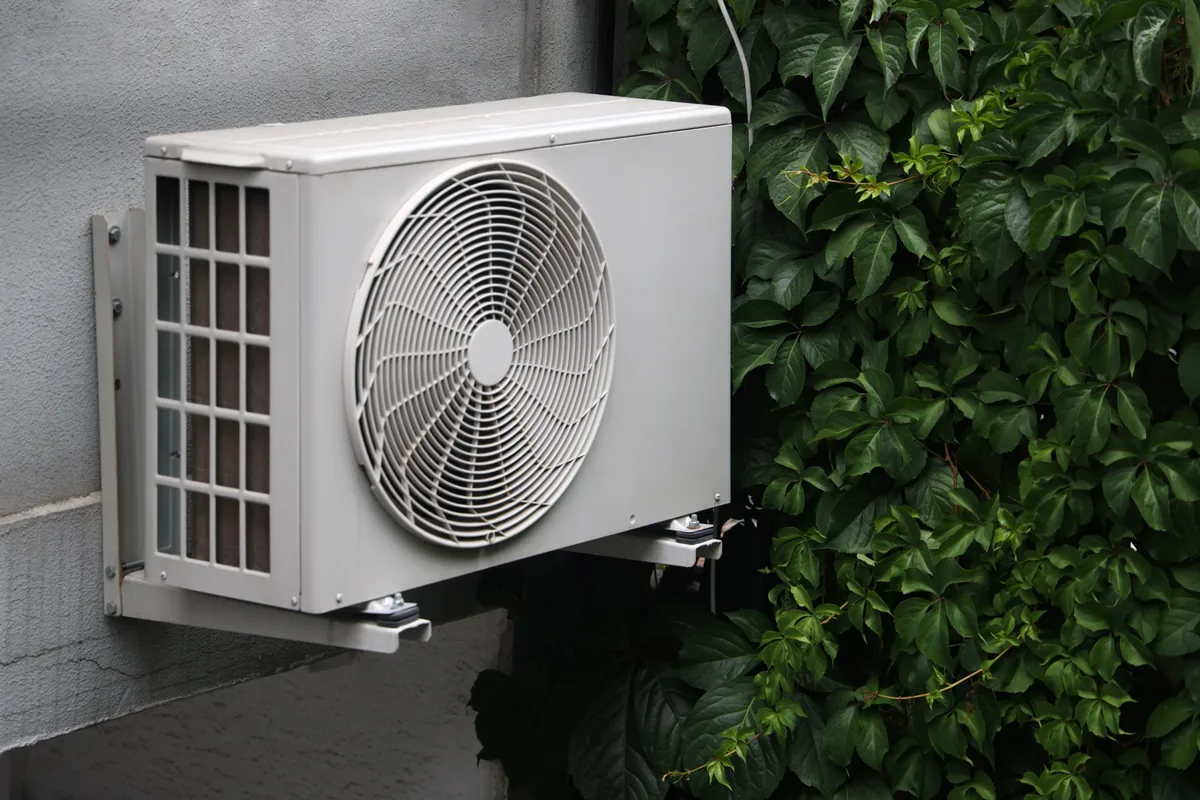
- Frozen ground: a pad set on frozen soil settles or heaves at the thaw and pulls on the line set. In winter the unit goes on wall brackets anchored to the foundation, or on a stand over an existing concrete surface.
- Bracket location: brackets belong on the foundation wall, not on a framed bedroom wall, where compressor vibration carries indoors.
- Snow line: a heat pump runs all winter, so it has to sit above the snow that drifts against that wall, with open space underneath for defrost meltwater to drain instead of freezing into the base pan.
- Meltwater path: defrost water must not run across a walkway or driveway, where it turns to ice.
- Roof edge: a unit directly under an eave with no gutter takes falling ice and snow; it gets moved or fitted with a snow hood.
- Wall penetration: sealants have minimum application temperatures, so a low-temperature product is used on the line-set sleeve.
- Electrical: the new 240-volt circuit and outdoor disconnect are installed by a licensed electrical contractor and filed with the ESA, the same as in any season.
On a day near −20 °C, evacuation and charging are poor practice and outdoor work is hard to do well, so a careful installer moves the booking to a milder day. What to do after the install when a storm buries the unit is covered in what to do if your heat pump is covered in snow.
Hybrid changeover: the furnace keeps heating until the cutover
With a hybrid, or dual-fuel, system the house is never left cold. The existing furnace runs while the outdoor unit is mounted, the line set is run and the electrical is done. It is shut off only for the few hours it takes to fit the new coil into the supply plenum above it and reconnect the sheet metal. A straight add-on to a working furnace is typically a one-day cutover; replacing the furnace at the same visit makes it two days, as how long heat pump installation takes explains.
The last step is the thermostat. A dual-fuel control needs an outdoor temperature at which heating hands over from the heat pump to the gas furnace, and that setting shapes your winter bills more than the equipment brand does. Keeping your furnace and adding a heat pump walks through how the two share the season.
Should you install now or wait for spring?
Install now if the furnace has failed or the old air conditioner is already dead; wait only if nothing is broken and you want the cooling test done on install day. Two things should be settled before a winter booking. Rebates under the Home Renovation Savings Program need approval before the install and a participating contractor, so an emergency swap done first and applied for afterwards does not qualify. And the price should be in writing:
- Three-ton cold-climate heat pump, installed: $9,500–$15,000
- Whole-home ducted cold-climate heat pump, across sizes and electrical work, before rebates: $6,000–$16,000
ZK Mechanical quotes heat pump installs in every season across Burlington, Oakville, Hamilton and Mississauga; ask us to put the spring cooling check on the quote. See heat pump installation, compare figures on our pricing page, or book a site visit.