
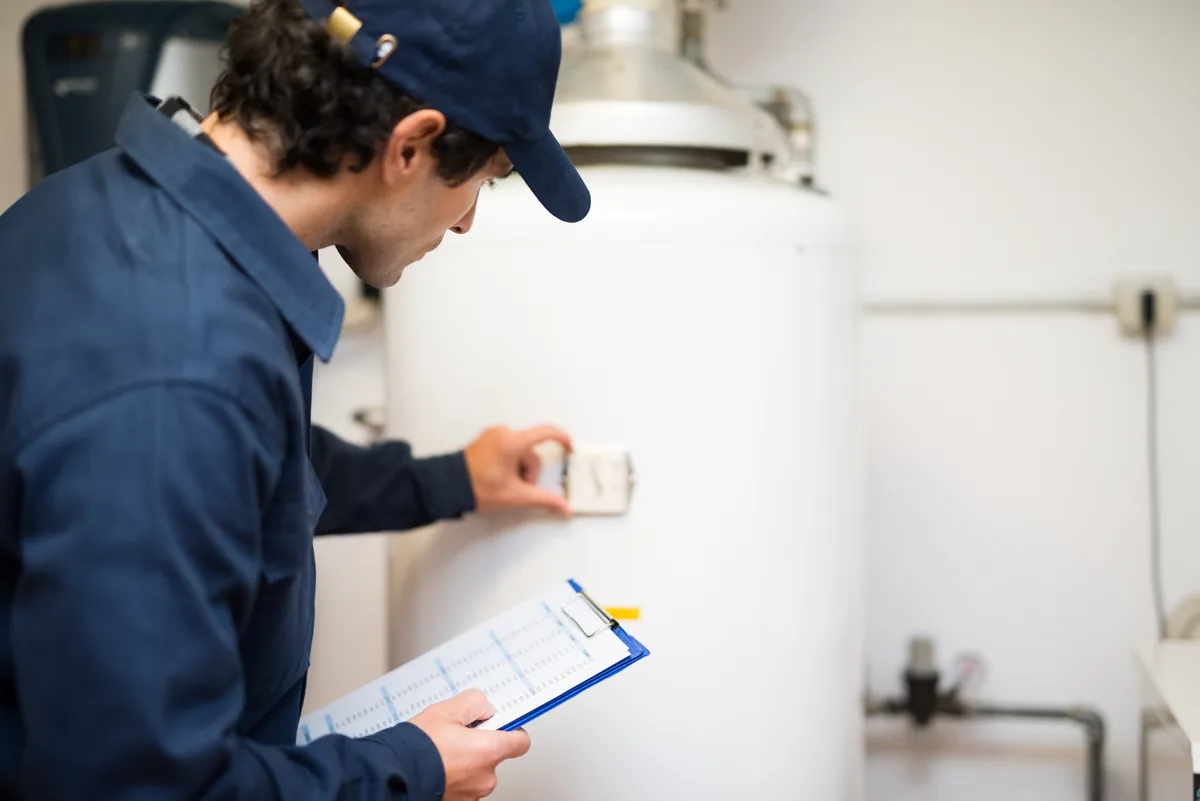
Electric vs gas water heater in Ontario: which costs less? Gas costs less to run on standard electricity plans, and the two cost about the same to install, $1,200–$2,500 for a like-for-like tank swap. A 40,000 BTU gas tank also reheats about twice as fast as a 4,500 W electric tank, so the same household usually needs a larger electric tank. Stay with gas if the house already has a gas line and a sound vent; go electric if it has neither, and look hard at a heat pump water heater, which uses about a third of the electricity.
Running Cost: Gas Wins on Time-of-Use and Tiered Plans
On the two electricity plans most Ontario households use, a gas tank is the cheaper one to run. A standard gas tank turns roughly 60% of its fuel into hot water (a UEF around 0.6) and an electric tank better than 90%, but a unit of heat from Enbridge gas costs far less than the same heat from the grid, and that gap is wider than the efficiency difference. The federal consumer carbon charge came off gas bills in April 2025, which widened it again.
Electricity has three regulated price plans, and the plan matters more for a water heater than for almost anything else in the house, because a tank can do its heating whenever you tell it to.
- Time-of-use (TOU): off-peak on weekday evenings and nights from 7 p.m. to 7 a.m. and all weekend, with mid-peak and on-peak prices during weekdays. An electric tank reheating after morning showers pays a daytime price.
- Tiered: one price up to a monthly threshold and a higher price above it, at any hour. Simple, but an electric tank adds enough use to push some households into the upper tier.
- Ultra-low overnight (ULO): a very low price every night from 11 p.m. to 7 a.m., paid for by a high on-peak price on weekdays from 4 p.m. to 9 p.m. An electric tank on a timer that heats only overnight is the one setup where plain electric gets close to gas.
On the Ontario Energy Board's schedule that took effect November 1, 2025, the ULO overnight price was 3.9 cents per kWh against 9.8 cents for TOU off-peak and 12.0 cents for the first tier, and the ULO on-peak price was about ten times the overnight one. The Board resets these prices, so check the current schedule and confirm which plans your utility offers, whether that is Burlington Hydro, Oakville Hydro, Milton Hydro, Alectra or Toronto Hydro.
How to Check With Your Own Bills: The Times-Seven Rule
A cubic metre of natural gas holds a little over 10 kWh of heat, and a standard gas tank gets about 6.4 kWh of that into the water. An electric tank needs roughly 7 kWh to deliver the same amount. So multiply your all-in electricity price per kWh by seven and compare it with the all-in price per cubic metre on your Enbridge bill, delivery and supply charges included. If seven times the electricity price is higher, gas is cheaper to run.
The rule leaves two things out. A timer and a large enough tank can move most of an electric heater's use into the cheapest hours, so use the price you would really pay, not the average. And if the water heater would be the only gas appliance in the house, you are paying Enbridge's fixed monthly customer charge for it alone, which can erase the saving.
Recovery Rate: Why Electric Usually Needs a Bigger Tank
A 40,000 BTU gas burner reheats roughly 40 US gallons (about 150 litres) an hour through a 50°C rise; a 4,500 W element manages about 20 gallons (75 litres). An electric tank has two elements, but they take turns, so the draw and the recovery are those of one. That is why a family that gets by on a 40-gallon gas tank usually needs a 50- or 60-gallon electric tank, and why back-to-back showers expose an electric tank first.
Recovery also slows in winter, when water arrives from the main much colder than it does in August and every litre needs more heating. If you are on ULO and heating only overnight, size the tank for a whole day of use, not for recovery. Our guide to 40 vs 50 gallon water heaters works through the sizing.
What Each One Needs Installed
Free quotes, written pricing.
Electric is simpler in the mechanical room and harder at the panel; gas is the reverse.
- Electric tank: a dedicated 240 V, 30 A circuit on a double-pole breaker with 10-gauge copper wire, no vent and no combustion air. A new circuit needs an ESA notification filed by a licensed electrical contractor, and on a 100 A panel that already feeds a range, a dryer and an air conditioner, a load calculation comes first.
- Gas tank: a gas line sized to CSA B149.1, a vent (a chimney or B-vent for a conventional tank, plastic sidewall pipe for a power-vent tank), combustion air, and a TSSA-licensed gas technician to install and fire it. Changing how the appliance vents is where gas installs get expensive.
- Both: a temperature and pressure relief valve piped toward the floor, a drain pan where a leak would do damage, and a thermostat setting that keeps the stored water hot enough to be safe from bacteria.
A conventional gas tank with a standing pilot needs no electricity, so it keeps making hot water when the grid is down. An electric tank and a power-vent gas tank do not. The differences between gas vent types are covered in power vent vs conventional vent water heaters.
What Each Costs to Install in Ontario
A straight swap of either type sits in the same band. The price moves when the fuel or the venting changes.
- Gas or electric tank, like for like: $1,200–$2,500 installed, depending on size and venting
- Electric tank where no 240 V circuit exists: the tank band plus the electrician's circuit and ESA notification, quoted on site
- Electric to gas: the tank band plus a gas line run and a new vent, quoted on site
- Repair instead of replacement on an electric tank: a burnt-out element is $200–$400 replaced
- Heat pump water heater: more than either standard tank, with the price driven by the unit, a condensate drain and any electrical work
When a Heat Pump Water Heater Changes the Answer
A heat pump water heater is an electric tank with a small heat pump on top that pulls heat out of the basement air instead of making it with an element. It uses roughly a third of the electricity of a standard electric tank. By the times-seven rule that is about 2 kWh for the hot water a cubic metre of gas delivers, which puts its running cost in the same range as gas and below it when the heating happens off-peak.
The trade-offs are physical. It needs a room with enough air around it, or ducting, plus a condensate drain, the same 240 V circuit and headroom, because the unit is taller than a plain tank. It cools and dehumidifies the space it sits in, which is welcome in a damp July basement and a small penalty in January. Recovery in heat-pump mode is slower than either conventional tank, so it is sized generously; details and current incentives are on our heat pump water heater page.
Verdict: Which One Costs Less for Your House
- Gas line and a sound vent already there: replace gas with gas. Lowest running cost on TOU and tiered plans, fastest recovery, and no panel work.
- Gas furnace, but the water heater has lost its chimney to a furnace upgrade: price a power-vent gas tank against a heat pump water heater before defaulting to either.
- All-electric house, condo or rural lot without a gas main: stay electric. Put a standard tank on ULO with a timer, or buy a heat pump water heater if the room suits it.
- Electric tank that has stopped heating: check the elements and thermostats first. A $200–$400 element is worth doing on a tank under about 8 years old that is not leaking.
ZK Mechanical installs and repairs both types, and our TSSA-licensed technicians handle the gas and venting side. If your electric tank is the problem today, see electric water heater repair in Burlington; for a replacement quote on either fuel, start at water heater installation and repair or ask for a written price.
Frequently asked questions
Is it worth switching from an electric water heater to gas?
Only when gas is already in the house for a furnace and both the gas run and the vent route are short. Then the lower running cost pays back the conversion over the tank's life. If the water heater would be the only gas appliance, the fixed monthly gas charge and the cost of bringing in a line usually cancel the saving, and a heat pump water heater is the better upgrade.
Can I put my electric water heater on a timer?
Yes. An electrician installs a timer or smart switch rated for a 240 V, 30 A load ahead of the tank. On the ultra-low overnight plan, set it to heat between 11 p.m. and 7 a.m. The tank has to be large enough to carry the household through the day, and the thermostat should stay at its normal setting; turning it down to stretch the supply lets bacteria grow.
Does an electric water heater last longer than a gas one?
Both typically last 8–12 years. An electric tank has fewer parts to fail, with no burner, vent or gas valve, and its elements and thermostats are inexpensive to replace. Tank life on either type is set by the anode rod and the water. Hard water in Halton and Hamilton coats electric elements with scale and builds sediment in gas tanks, so an annual flush helps both.
Will a gas water heater work in a power outage?
A conventional atmospheric tank with a standing pilot or a self-powered gas valve will, because it needs no household electricity. A power-vent tank and a tankless unit will not fire without power, and an electric tank obviously cannot heat. Any insulated tank holds usable hot water for several hours after the power goes out, so short outages rarely leave you cold.