
Quick answer
In an Ontario commercial lease, HVAC responsibility is whatever the lease says: the Commercial Tenancies Act does not assign it. Under a net lease the tenant usually pays to maintain and repair the rooftop unit serving its space. Replacement of a worn-out unit is the disputed part, and is often done by the landlord and charged back as amortised additional rent.
Who is responsible for HVAC in a commercial lease in Ontario? The lease decides, clause by clause. A residential tenancy puts heating repairs on the landlord by statute, but Ontario's Commercial Tenancies Act says nothing about who maintains a rooftop unit. Whatever the two parties signed is the rule, which is how one plaza tenant ends up paying for a compressor while the neighbour pays nothing.
What the lease type usually means for the rooftop unit
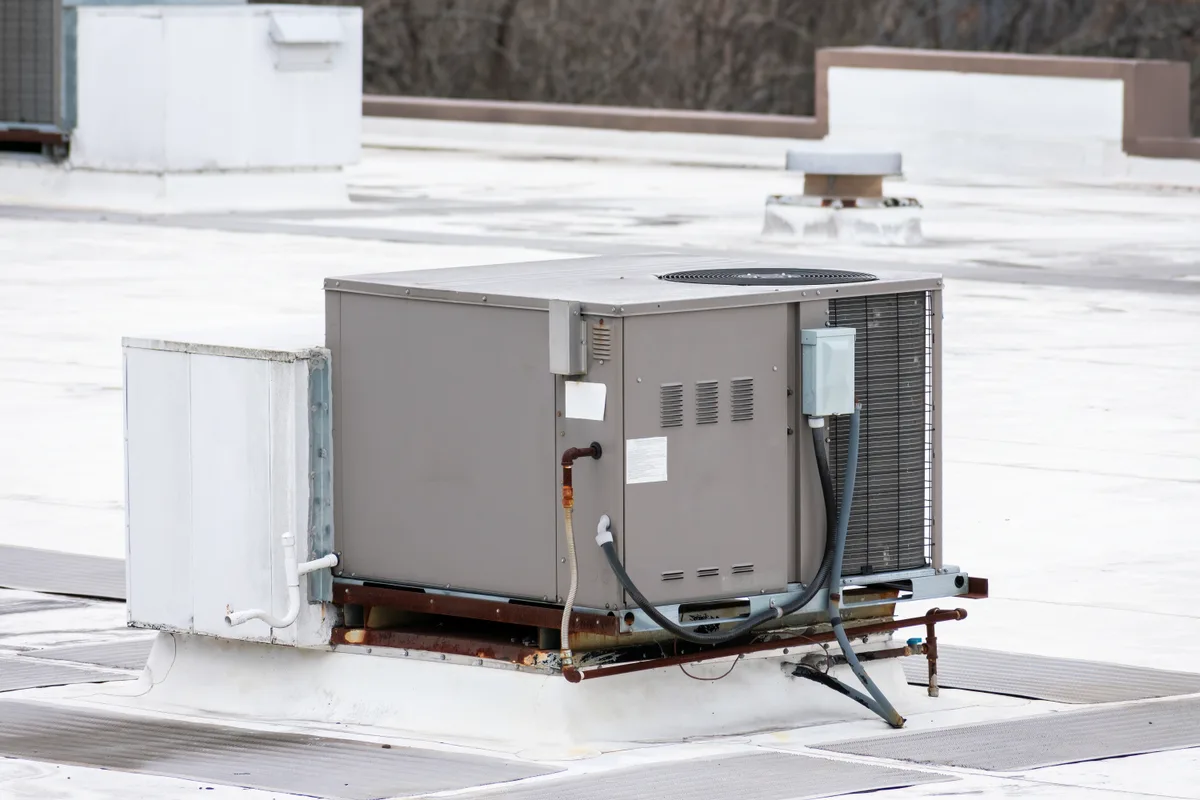
- Net or triple-net lease: the tenant maintains, repairs and often replaces the HVAC serving its premises, directly or through operating costs. This is the norm for plaza units, industrial bays and free-standing buildings with a dedicated rooftop unit (RTU).
- Gross or semi-gross lease: the landlord maintains the equipment and recovers the cost in the rent. Common in multi-tenant office buildings with a shared central plant.
- Shared systems: where one unit serves several tenants, the landlord maintains it and each tenant pays a proportionate share as additional rent.
Find three clauses: the repair and maintenance covenant, the definition of operating costs or additional rent, and the surrender clause that says what condition the equipment must be in when you leave. The words 'repair and replace' in the first, or 'good working order' in the last, change who buys the next unit.
Repair versus capital replacement: the clause that causes disputes
The fight is rarely over a contactor or a belt. It starts when a 20-year-old RTU needs a compressor or a heat exchanger and the repair costs a large share of a new unit. If the lease says the tenant repairs, the tenant argues that replacement is a capital cost belonging to the building owner, and the landlord argues that keeping the unit working includes replacing it.
Well-drafted leases settle it in advance with an amortisation clause. The landlord replaces the unit, spreads the cost over its useful life with interest, and bills the tenant as additional rent only for the years left in the term. If your lease is silent, a tenant with three years remaining can be asked to pay for a unit that will serve the building for fifteen. That is a point for your lawyer before signing, not after the unit fails.
A technician's report cannot interpret the lease. It supplies the facts both sides argue from: the unit's age, what failed, whether the failure follows from skipped maintenance, and whether a repair is technically reasonable.
What tenants should do before signing or renewing
- Read the nameplate. The RTU's data plate gives the model and serial number, and the serial encodes the year of manufacture. A unit past 15 years is a replacement you may be paying for during the term.
- Check the refrigerant on the same plate. R-22 is no longer produced, so a major leak on an R-22 unit usually means replacement, not repair.
- Commission an independent condition report, not one from the landlord's contractor. A commercial lease HVAC inspection documents heat exchanger condition, compressor amp draw, economizer operation and the state of the coils and curb, with photos.
- Negotiate from the report: a landlord warranty on the unit for the first year or two, a cap on the tenant's annual HVAC spend, or replacement at the landlord's cost with an amortised chargeback.
- Hold a quarterly maintenance contract from day one and keep the reports. Most net leases require one, and the dated record is the tenant's proof of upkeep when the unit fails or at surrender.
- Confirm who may work on the roof. Some landlords require an approved contractor or a sign-off that protects the roofing warranty.
What to do when the rooftop unit fails mid-lease
Call for service first and argue second. A restaurant, clinic or salon without heating or cooling loses revenue by the hour, and the lease question will be settled on paper later. Notify the landlord in writing the same day, ask the technician for a written finding with photos, and do not authorise a full replacement until the landlord has answered in writing.
A new rooftop unit is priced by tonnage, gas heat section, curb adapter and crane access, so there is no single figure to quote here; what a commercial rooftop unit costs breaks the quote into its parts.
ZK Mechanical services and replaces rooftop units for tenants, landlords and property managers in Burlington, Oakville, Mississauga, Brampton and Hamilton, and puts findings in writing for either side. For commercial HVAC service or a pre-lease inspection, call (647) 801-1252 or request a site visit. Related questions for owners and tenants are in the costs and buying index.