
Quick answer
Usually no. A new furnace reuses the existing trunk and branch ducts in most houses; what gets rebuilt is the supply plenum and the transition at the furnace, often with a return-air fix. Ducts need work when a static pressure test reads well above the roughly 0.5 inches of water column most furnaces are rated for, when returns are undersized, or when runs leak or are wrapped in asbestos.
Do I need to replace my ducts with a new furnace? In most houses, no: sheet-metal ductwork outlasts three or four furnaces, and the installer connects the new unit to what is there. What does change on every install is the first metre of duct on each side of the furnace. Whether anything beyond that needs work is decided by two measurements, not by the age of the house.
What is rebuilt on a normal furnace replacement
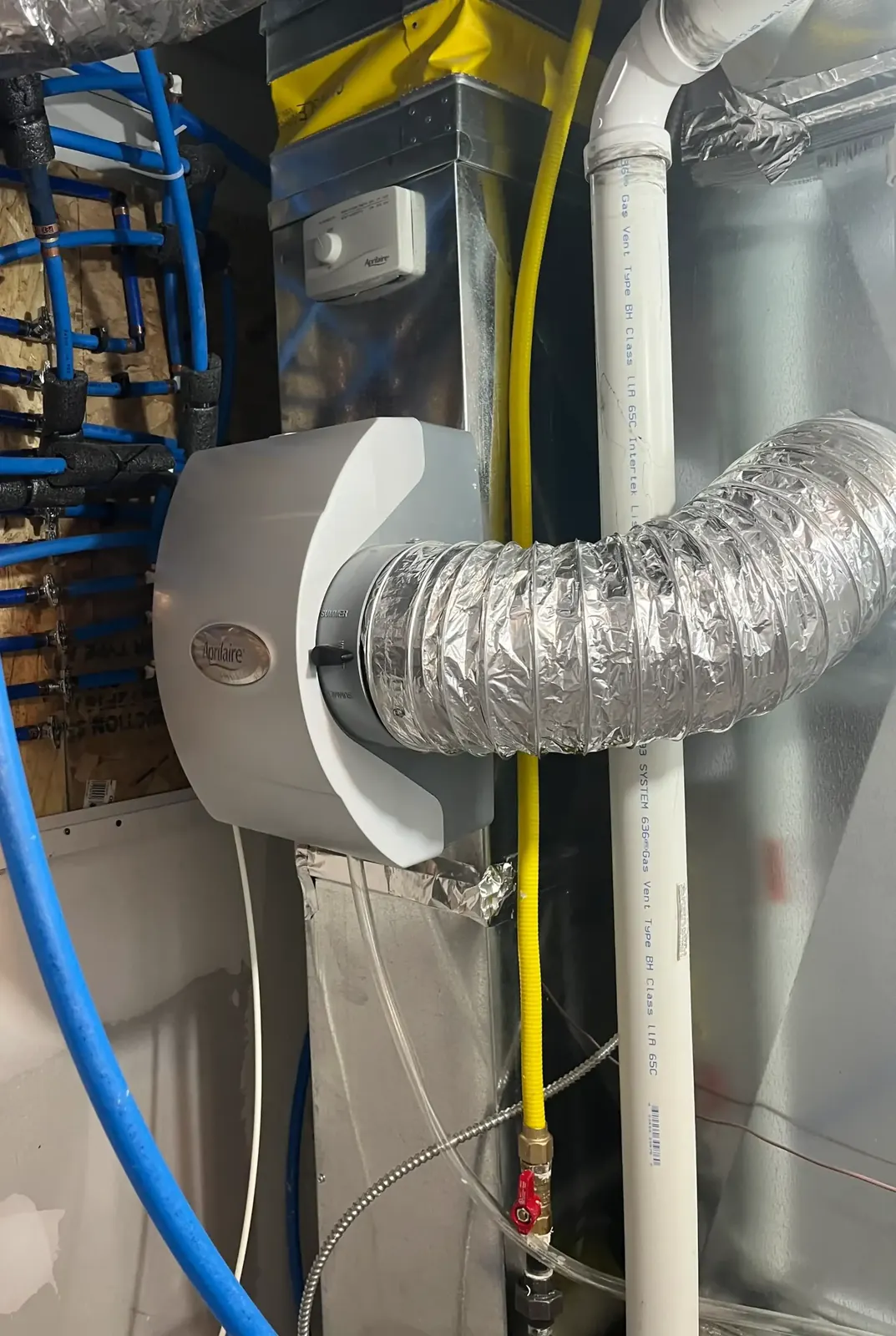
- The supply plenum: the sheet-metal box on top of the furnace. A new furnace is rarely the same width, depth or height as the old one, and a high-efficiency unit is often shorter, so the plenum is remade or adapted, with the AC coil cased inside it.
- The return drop and transition: the duct that brings air back into the side or bottom of the furnace, with a proper filter rack. A leaky filter slot, or a return squeezed through an opening too small for the blower, is corrected here.
- The joints the installer touches, which are sealed before the furnace is started.
- Venting and the condensate drain, which are not ducts but are replaced with the furnace.
These pieces are fabricated for the job and belong in a normal installation quote. If a quote for a straight furnace swap includes whole-house duct replacement, ask to see the measurement behind it.
The tests that decide whether your ducts are adequate
- Total external static pressure. The technician drills two small test ports and reads the pressure the blower is working against. Most residential furnaces are rated for about 0.5 inches of water column; a reading near that is fine, and a reading approaching double it means the ducts are choking the blower. The glossary entry on static pressure explains the number.
- Temperature rise. Supply air temperature minus return air temperature, compared with the range on the furnace's rating plate (a typical plate reads about 19 to 36 °C). A rise above the range means too little air is crossing the heat exchanger, which trips the high limit and shortens the exchanger's life.
- Supply and return sizing against the new blower. Trunk dimensions and return grille area are checked against the airflow the new furnace and the AC coil need. A variable-speed blower pushes harder against a restrictive duct instead of delivering less air, so the symptom is noise and a higher hydro bill, not an obvious fault.
Ask for both readings on the commissioning sheet when the install is finished. They are also the first thing to look at if the new furnace is louder than the old one.
When the ducts do need work
- Undersized returns. The most common duct fault in 1950s–60s bungalows and many 1970s–90s subdivision houses is a single central return grille feeding a furnace that needs more. The fix is an added return or a larger drop, not new ducts throughout.
- A heat pump or a larger AC coil. A heat pump delivers its heat at a lower supply temperature than a gas furnace and needs more airflow to do it, so ducts that were adequate for a furnace can be marginal for a hybrid system. See whether a heat pump can use your existing ductwork.
- Leaky runs: joints that have separated in a crawlspace or garage ceiling, or panned joist returns pulling air from the basement. Sealing is usually enough.
- Asbestos. White or grey paper-like wrap or tape on ducts and around floor boots in houses built before the 1980s may contain asbestos. It must not be cut, scraped or disturbed during an install; where it is damaged or in the way, a qualified abatement contractor removes it first.
- Crushed or kinked flex duct, and additions that gained rooms without gaining duct.
What targeted duct work costs compared with full replacement
Full duct replacement in a finished house is rare, because it means opening ceilings and walls. Targeted work is what most houses need: a new plenum, an added return, a resized trunk section, sealing. It is priced from a site visit, not a rate card, and how ductwork is priced lists the line items. For scale, the furnace itself runs $4,500–$7,500 installed at high efficiency.
If a quote leaves you unsure whether its duct line items are needed, ask for the static pressure reading that supports them. ZK Mechanical handles ductwork installation and modification alongside furnace replacements in Burlington, Oakville, Milton and Hamilton; call (647) 801-1252 or book a free quote visit. Other pre-purchase questions are grouped under costs and buying.