
Quick answer
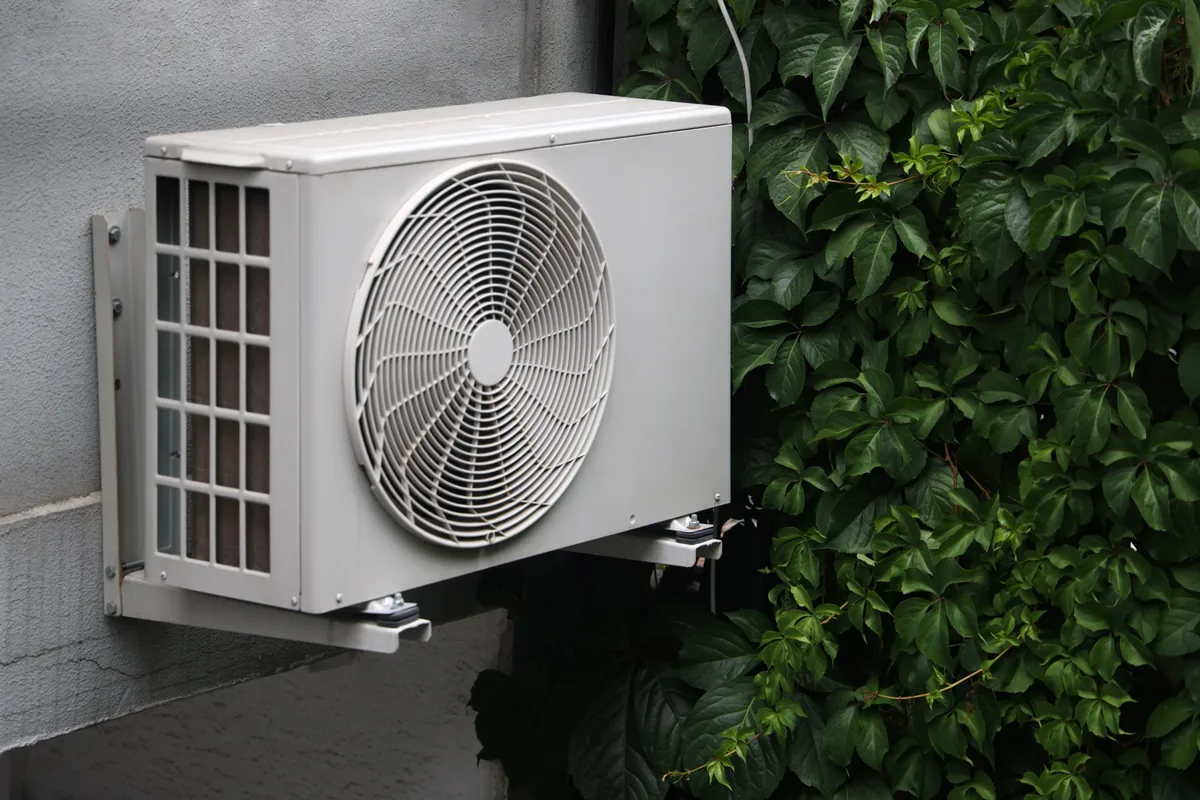
The most efficient heating system for Ontario is a cold-climate air-source heat pump: it moves heat instead of burning fuel, so it delivers two to three units of heat for every unit of electricity through most of our winter. Among fuel-burning systems, a condensing gas furnace at 96 to 98 percent AFUE is the top of the range.
Asked which heating system is most efficient for Ontario, the technical answer is the one that does not burn anything: a cold-climate air-source heat pump. Efficiency and cost are not the same question, though, which is why our answer on the cheapest way to heat a house can point somewhere else. Here we are talking about how much useful heat comes out of each unit of energy going in — and how much of that advantage survives a Burlington January.
Three different scales, and how to read them
- AFUE rates fuel-burning equipment over a season. A condensing gas furnace at 96 to 98 percent turns nearly all of the gas into delivered heat; a 1990s mid-efficiency unit sends a fifth of it up the chimney.
- HSPF2 rates a heat pump's heating season, and SEER2 its cooling season, under the current test standard — see what SEER2 means in Ontario.
- COP is the number that matters in February: units of heat delivered per unit of electricity, quoted at a stated outdoor temperature. A COP of 3 at 0 °C and a COP near 2 at −15 °C is a realistic shape for a good cold-climate machine.
Why 300 percent is possible and 100 percent is not
A furnace can never give back more energy than the fuel contained, so AFUE tops out below 100. A heat pump is not making heat — it is collecting heat that already exists in the outdoor air and pumping it indoors, which is why the same kilowatt-hour can land as three kilowatt-hours of heating. That is also why comparing a 98 percent furnace to a heat pump by their headline percentages is meaningless. They are measuring different things.
What happens to that efficiency at −15 °C in Burlington
Capacity and COP both fall as the outdoor temperature drops, and a cold-climate model is one engineered to hold useful output far lower than older heat pumps did. The important local point is where our winter sits: most of the heating season in Burlington, Oakville and Hamilton runs between about +5 °C and −10 °C, which is exactly the band where a heat pump is at its best. The deep cold arrives in short stretches, and it is those stretches — plus the lake-effect wind coming off Lake Ontario — that the backup heat exists for. At what temperature a heat pump stops working covers the cutoff in detail.
Dual fuel: the most efficient system most GTA houses can use
Pair a heat pump with the gas furnace you already have and the thermostat picks the cheaper source at any outdoor temperature, running the heat pump through the long mild middle of the season and handing off to gas when the cold sets in. For a Millcroft or Glen Abbey house with good ducts and an existing furnace, that is usually the highest real-world efficiency available without rebuilding anything — see hybrid heat pump systems for how the switchover point is set.
Where geothermal fits, and where it does not
Ground-source heat pumps are more efficient again, because the loop draws from soil that stays near a steady temperature all winter instead of from −15 °C air. The cost driver is the loop field, not the machine: drilling vertical bores or trenching a horizontal field needs land and access, which a typical Alton Village subdivision lot does not have and a rural Flamborough or Binbrook property might. It is a real option worth pricing on acreage and rarely worth it on a 40-foot lot.
Common questions about heating efficiency
- Is a two-stage or modulating furnace more efficient? Slightly on AFUE, more on comfort: a modulating burner at 98% AFUE beats a single-stage at 96% by a couple of points, but the real gain is longer, quieter cycles and better dehumidification from the variable-speed blower.
- Does a heat pump need a backup furnace here? Not always, but most Burlington and Hamilton installs keep one, because sizing a heat pump alone for the coldest week means oversizing it for the other 50. Electric backup strips work but cost more to run than gas on those nights.
- Is a boiler efficient? A condensing boiler reaches the same 95%-plus range as a condensing furnace when the return water comes back cool enough to condense. On an old high-temperature radiator loop that was never re-balanced, it runs well below the number on its badge.
Ratings only pay off if the installation is right
A high rating on a badly matched or oversized system does not survive contact with a real house. Undersized returns and high static pressure choke a variable-speed blower, an oversized unit short-cycles and never reaches its rated efficiency, and a heat pump commissioned with the wrong refrigerant charge quietly loses a chunk of its COP. Insist on a heat-loss calculation, a matched indoor and outdoor pairing, and a written commissioning report — that is what turns a spec sheet number into a lower bill. Talk to us about heat pump installation or book an efficiency assessment and we will tell you which of the three routes fits your house.