
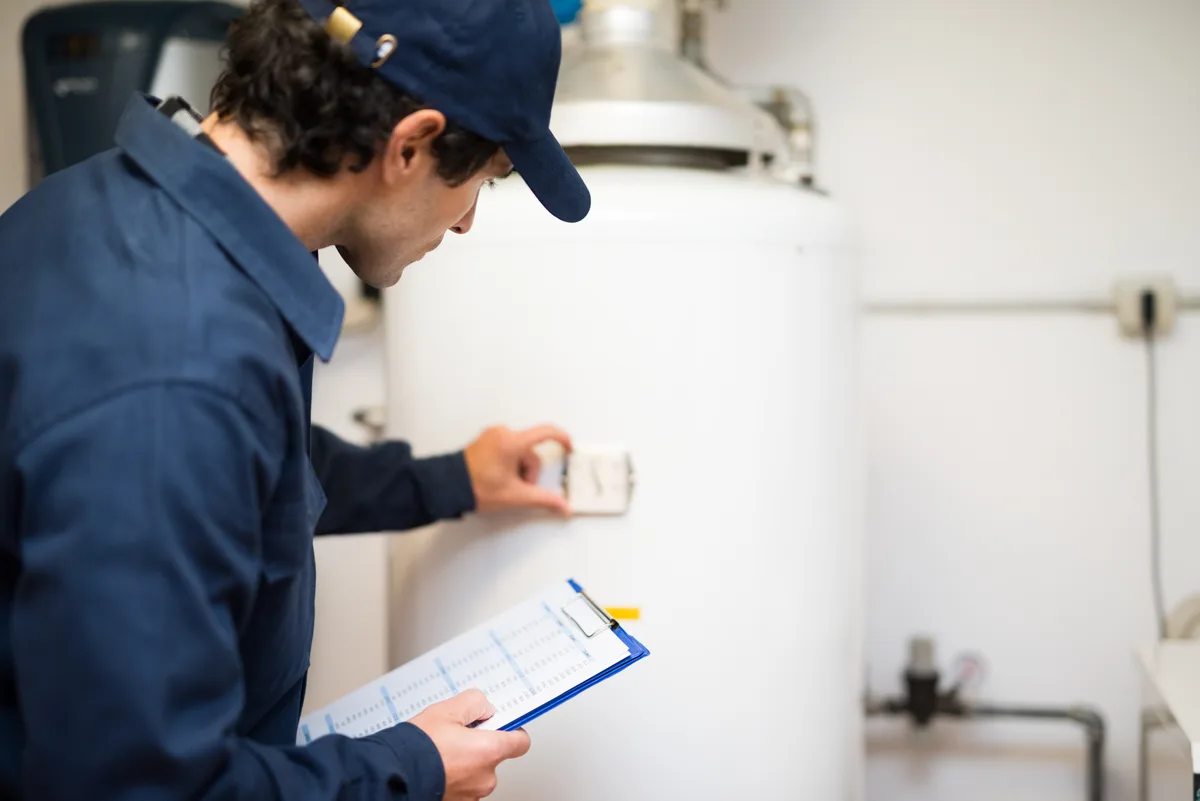
Quick answer
The signs a water heater is about to fail are rusty water from the hot taps only, rumbling or popping as it heats, moisture or rust trails at the base, a relief valve that keeps weeping, and hot water that runs short. On a tank past 10 to 12 years, any moisture from the tank itself means replace it before it leaks.
The signs a water heater is about to fail fall into two groups: parts wearing out, which can be repaired, and the steel tank rusting through, which cannot. A tank water heater in this area typically lasts 10 to 12 years, and less on hard water that has never been flushed out of it. So each sign has to be read against the age on the rating plate. A rumble at year four is a maintenance job; the same rumble at year thirteen with a damp base is a countdown.
Five warning signs, and what each one tells you
- Rusty or brown hot water. If the cold tap runs clear and only the hot side is discoloured, the rust is coming from inside the tank: the anode rod is used up and the glass lining has been breached. Discolouration on both sides points to the street main or old house piping instead; why hot water turns brown or rusty separates the two.
- Rumbling, popping or banging during a heating cycle. Mineral sediment has settled on the tank bottom and water trapped under it is boiling its way out. The noise is harmless at first, but the layer overheats the steel beneath it and shortens the tank's life.
- Moisture, a rust trail or a white mineral crust at the base. Check the fittings on top first, because a drip from a loose connection runs down inside the jacket and shows up at the bottom. Water with no source above it is coming through the tank wall.
- A weeping temperature and pressure (T&P) relief valve. The valve may be worn, or it may be doing its job because pressure or temperature is too high. Either way, a discharge pipe that is wet week after week needs a diagnosis, not a cap.
- Hot water running short. Less hot water than last year from the same routine usually means a failed element on an electric tank, a broken dip tube, or sediment taking up room and slowing the burner.
How to read a water heater's age from the serial number
The age is coded into the serial number on the rating plate, the large label on the side of the tank that also lists the model, capacity and input. Most manufacturers put the build date in the first four characters. Common formats are year then week (a serial starting 1432 was built in week 32 of 2014), month then year (0514 is May 2014), or a letter for the year followed by a letter for the month.
If the code is not obvious, the manufacturer's website decodes it from the brand and serial. A rental sticker from Enercare or Reliance may carry an install date as well. Once you have the number, the rule is simple: under 8 years, repair is usually worth it; past 10 to 12, put repair money into a heater only when the tank itself is dry and sound.
Which signs can be repaired and which mean replace before it leaks
Repair makes sense when the failed part bolts or threads onto a healthy tank. Replacement is the answer when the tank is the part that failed. Published prices for the common jobs:
- Heating element on an electric tank: $200–$400 replaced.
- Thermocouple on a gas tank with a pilot that will not hold: $150–$300.
- Gas control valve: $400–$600.
- Thermostat, relief valve or anode rod: inside the usual $150–$800 repair band, quoted in writing before the work. A fresh anode only helps while the glass lining is intact.
- Diagnosis on site: $90–$150, which the repair invoice then absorbs.
- Tank-for-tank replacement: $1,200–$2,500 installed.
Replace, do not repair, when water is seeping from the tank body or the seam at the base, when rust has stained the hot water on a tank past 10 years, or when a second major part fails on a tank past its expected life. A tank that seeps today can let go and then keep running, because the supply line refills it as fast as it drains. A planned replacement costs the same as the emergency version and skips the flooded floor; whether to replace a water heater before it fails works through the timing.
What to check yourself, and when to call the same day
- Read the rating plate and work out the age.
- Run the cold and hot taps into a white bucket and compare the colour.
- Dry the base with a towel, lay down a sheet of paper and check it the next morning.
- Look into the open end of the relief valve discharge pipe for fresh drips.
- Listen through one full heating cycle after a long shower.
Call the same day if:
- Water is pooling under the tank or the paper is wet by morning. Shut the cold supply valve above the heater and follow how to turn off a leaking water heater.
- The relief valve is releasing hot water in bursts or the tank is hissing.
- You see scorch marks or soot around the burner door or draft hood of a gas tank.
- The tank sits in a finished basement or above living space, where a leak does the most damage.
Why tanks in Halton and Hamilton wear out the way they do
Hard water is the local factor. Municipal water in Halton and Hamilton carries enough dissolved calcium to leave a layer of scale in a tank every year, and homes on private wells in rural Caledon, Lowville, Kilbride and rural Flamborough often see more. A tank that is drained and flushed yearly, with its anode checked every few years, tends to reach the top of the 10 to 12 year range.
ZK Mechanical repairs and replaces gas and electric tanks across Burlington, Oakville, Milton and Hamilton, with the price in writing before work starts. The water heater service page lists what a repair or swap includes, and the pricing page shows the bands in one place. Call (647) 801-1252 or book an inspection and have the serial number handy.