
Quick answer
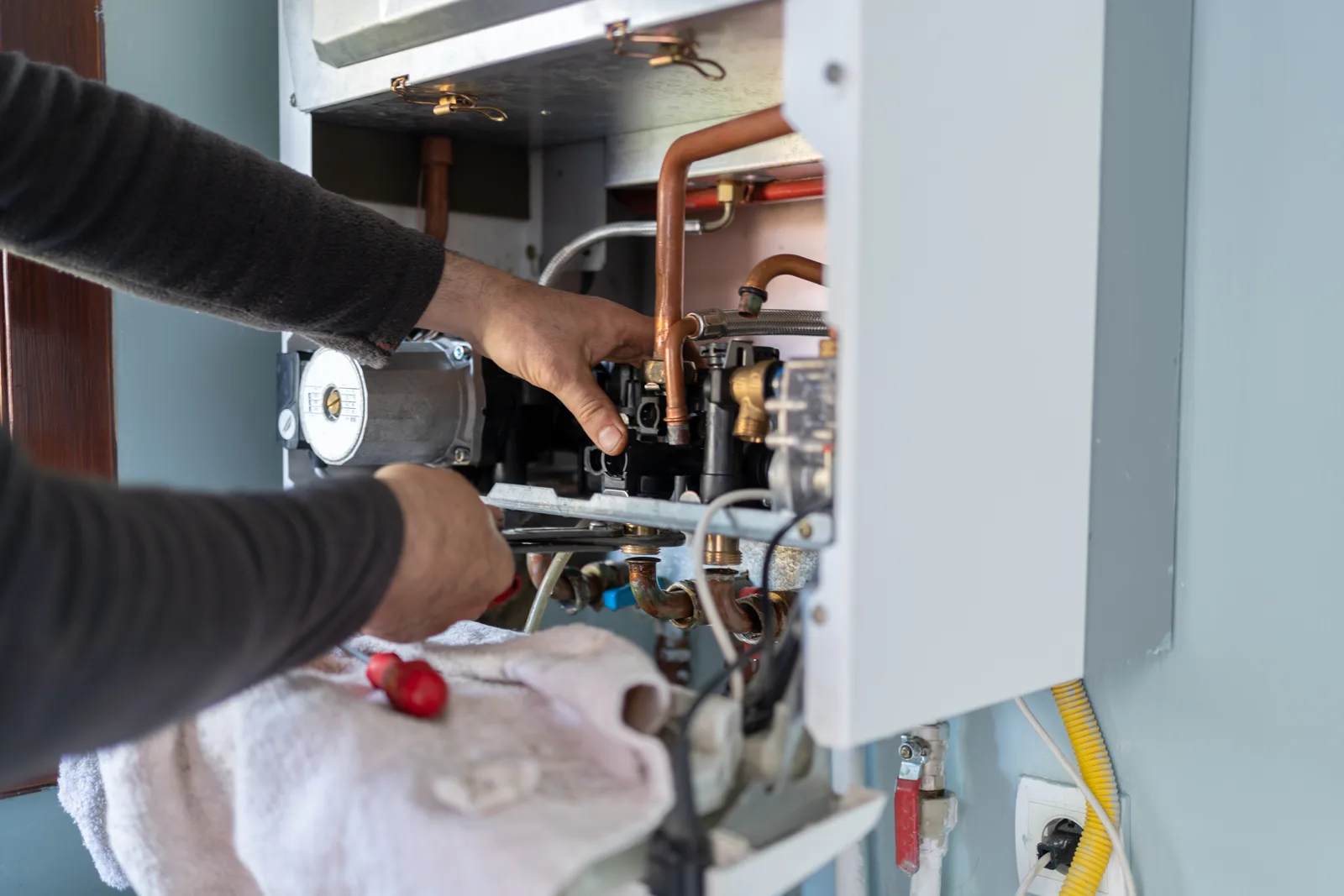
Most residential boiler repairs land between $150 and $800, on top of a $90–$150 diagnostic visit that gets credited toward the work. Small hydronic parts such as an air vent, a pressure-reducing valve or a thermocouple sit at the low end. A circulator, zone valve or expansion tank is mid-range, and gas valves and control boards are the expensive end.
Boiler repair is priced the same way furnace repair is — a diagnostic fee to find the fault, then a flat price for the fix — but the parts list is different, because a boiler has a water side as well as a gas side. These are the bands we quote from, and what pushes a job from one band into the next.
Typical residential boiler repair bands
- Diagnostic visit: $90–$150, folded into the repair once you approve it.
- Small hydronic parts and adjustments — automatic air vents, the pressure-reducing (auto-fill) valve, a relief valve, a thermocouple on an older standing-pilot boiler, a sensor or thermistor: $150–$450.
- Circulator pump, zone valve head or expansion tank replacement: $400–$900, depending on how the piping was done and whether there are isolation valves to work with.
- Gas valve, aquastat or control board: $500–$1,200. On wall-hung condensing boilers the board and gas valve are matched parts and rarely cheap.
- A leaking cast-iron block or a failed condensing heat exchanger: replacement territory rather than repair — see what a new boiler costs in Ontario.
Which band a job falls into often has less to do with the part than with access. A circulator with isolation flanges is a 45-minute swap. The same pump piped solid, with no flanges and no drain, means draining the system, refilling it, and purging air from every zone afterwards.
What breaks, by boiler type
Cast-iron sectional boilers — the upright units still feeding radiators in older Dundas and Hamilton houses — fail at their accessories long before the block gives up. Circulators, zone valves, aquastats, expansion tanks and the auto-fill valve make up nearly the whole repair list, and parts remain widely available even for units built in the 1980s.
Wall-hung condensing boilers and combis, common in newer townhouses and in renovated homes across Oakville and Burlington, are electronically managed and fail differently: ignition electrodes, flame sensors, fans, condensate traps and fouled heat exchangers. They also demand annual service. The burner and exchanger need cleaning, and a combi's domestic plate exchanger needs descaling, which matters here because Halton and Hamilton both draw hard water from Lake Ontario.
Condo and townhouse fan-coil units fed from a central boiler plant are a third category. When one suite is cold and the rest of the building is fine, the fault is usually in the suite equipment or its valve, not in the boiler at all.
What pushes a boiler repair bill up
- Discontinued equipment. A boiler whose manufacturer has left the Canadian market can mean a two-week wait and a premium on a matched control.
- Drain-and-refill work. Anything that opens the water side means purging air from every zone afterwards, and on a big radiator system that is real time on the clock.
- Glycol. Systems with antifreeze — common where a loop runs through an unheated garage or feeds a snow-melt zone — cost more to refill, and the glycol has to be tested and topped up rather than dumped.
- Access. A boiler tucked into a crawlspace or boxed in during a basement renovation adds labour to every visit it ever receives.
- Timing. ZK Mechanical adds no overtime, weekend or holiday surcharge, but most contractors do — does emergency service cost more sets out the usual premiums.
Repair or replace a boiler: the age test
The test is different from a furnace, because a good cast-iron boiler outlives furnaces by decades. A $500–$1,000 repair on a 30-year-old sectional boiler that is otherwise sound and heating evenly is often money well spent. The same repair on a 12-year-old condensing boiler with a scaled exchanger and a discontinued control is not. How long a boiler lasts gives you the lifespans to weigh it against.
One thing to fix before spending on anything else: pressure loss. A slow leak destroys boilers from the inside by continually dragging fresh, oxygenated, mineral-rich water into the loop, and no repair survives that for long. Why a boiler loses pressure covers the causes and how to find them.
Keeping boiler repair costs down
- Book annual service. A combustion check, a cleaning, an expansion-tank pressure test and a look at the relief valve catch most of what becomes an emergency later.
- Watch the gauge. A boiler needing a top-up more than once or twice a season is telling you it has a leak.
- Bleed radiators each autumn and note which ones need it every year. The same radiator every time means air is entering somewhere.
- Do not ignore a weeping relief valve or a damp circulator flange. Both are inexpensive now and expensive after they take the boiler with them.
ZK Mechanical services hot-water boilers alongside furnaces, with pricing agreed in writing and no premium for evenings or weekends. If yours is short-cycling, noisy, or leaving half the radiators cold, call (647) 801-1252 or book a diagnostic visit. Our boiler repair service page covers the hydronic work we do around Burlington, Oakville and Hamilton.