
Quick answer
A tankless water heater installation takes about 3 to 4 hours when a new tankless replaces an old one, and 6 to 8 hours, one working day, when a tank is converted to tankless. The conversion is longer because it adds a larger gas line, new sidewall venting, a condensate drain and wall mounting. A meter upgrade or a long gas run can add a second day.
How long a tankless water heater installation takes depends on what is on the wall today. Replacing an existing tankless with a new one is a morning: about 3 to 4 hours. Converting from a tank is a working day, 6 to 8 hours, because the house needs a bigger gas line, a new vent through the wall, a condensate drain and a mounting location before the unit can fire.
Tankless-for-tankless swap: 3 to 4 hours
When a failed or aging tankless is replaced with a current model, the gas line, the outlet and the drain are already in place. The work is isolating and removing the old unit, hanging the new one, adapting the water and gas connections and checking the vent. Vent pipe is the wildcard: each manufacturer specifies its own approved venting, so a different brand, or a move from a non-condensing to a condensing model, can mean new pipe through the same wall opening. With matching connections, hot water is back by lunch.
Tank-to-tankless conversion: one working day
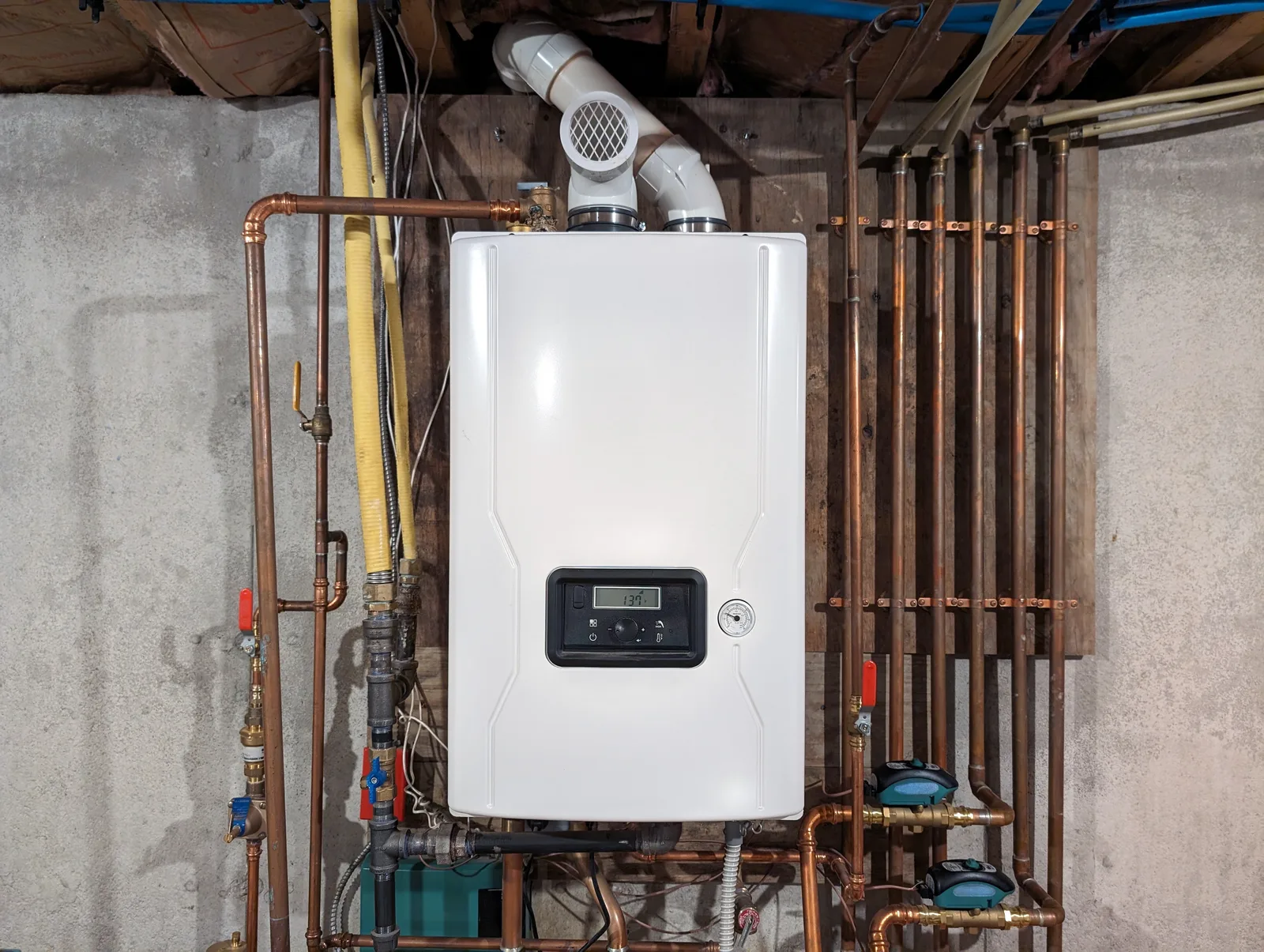
A conversion is several small jobs wrapped around one appliance. The steps that take the time, roughly in the order they happen:
- Gas line from the meter: a 199,000 BTU tankless needs far more gas than the tank it replaces, so a new or larger line, often 3/4 inch, is run back toward the meter. Under an open basement ceiling that is an hour or two; across a finished ceiling it is the longest part of the day.
- Vent termination through the rim joist: the wall is cored, the intake and exhaust pipes are sloped and supported, and the termination is placed to clear windows, doors, the gas meter and the property line by the distances the gas code and the manufacturer require.
- Wall mounting and water piping: backing on the wall, the unit hung, isolation valves on hot and cold, and the old tank's lines rerouted to the new location.
- Condensate drain and power: a drain line to the floor drain or a pump, and a 120 V outlet within reach of the cord.
- Pressure test: the new gas piping is tested and tagged before the appliance is connected to it.
- Commissioning and temperature setup: purging air, checking gas pressure with the furnace and other appliances running, confirming combustion, setting the outlet temperature and running each fixture in the house.
How long the house is without hot water
Less time than the job takes, in most cases. Where the tankless hangs in a new spot, the old tank keeps working while the gas line and vent are roughed in, and hot water is off only for the cut-over: usually 2 to 3 hours in the afternoon. Where the new unit goes exactly where the tank stood, the tank comes out first and there is no hot water for most of the working day. Cold water is shut off only briefly while the connections are made, so toilets and cold taps work for most of the visit.
What pushes a tankless install to a second day
- A meter upgrade by Enbridge: if the added load is more than the existing gas meter can supply, Enbridge has to change the meter, and Enbridge sets that date, not the installer. The load is calculated at the quote stage so this is known in advance.
- A long gas run: a meter on the opposite side of the house from the mechanical room, with a finished basement ceiling in between.
- No electrical outlet: adding a receptacle is electrical work that needs an ESA notification, and it is best done before install day.
- Masonry: coring through the brick or stone of a pre-war house takes longer than drilling the rim joist of a 1990s subdivision build.
- No clear place for the vent: a narrow side yard, a window or a gas regulator in the way can force a longer vent route.
None of these should be a surprise on the day. A site visit before the quote finds them, and the quote should state in writing whether the job is one day or two. Does a tankless need a bigger gas line? explains how the gas load is worked out.
What the day costs, and how to shorten it
Time and price move together. The typical tank-to-tankless conversion is $4,200–$5,000 installed, the full range is $3,500–$6,500, and a gas line that has to be upsized adds $400–$1,200 depending on the run. You can take time off the day by clearing a path to the mechanical room and the gas meter, emptying the wall where the unit will hang, and making sure the electrical panel can be reached. If the old tank is a rental, have the return authorisation in hand before install day; replacing a rental tank with your own tankless covers that sequence.
ZK Mechanical quotes tankless work after seeing the meter, the gas line and the wall, and the written quote gives the expected duration. Tankless water heater installation describes the Navien, Rinnai and Bosch units we install and service, and a straight tank replacement is timed in how long a water heater replacement takes. To book a site visit in Burlington, Oakville, Milton, Hamilton or the west GTA, call (647) 801-1252 or use the contact form.