
Quick answer
Yes. In most houses with a forced-air furnace you can add central air to the existing furnace. The furnace needs a blower that moves about 400 CFM per ton of cooling, room above it for an evaporator coil, and a control board with cooling terminals. If the furnace is older than about 15 years or its blower is too small, replace both together.
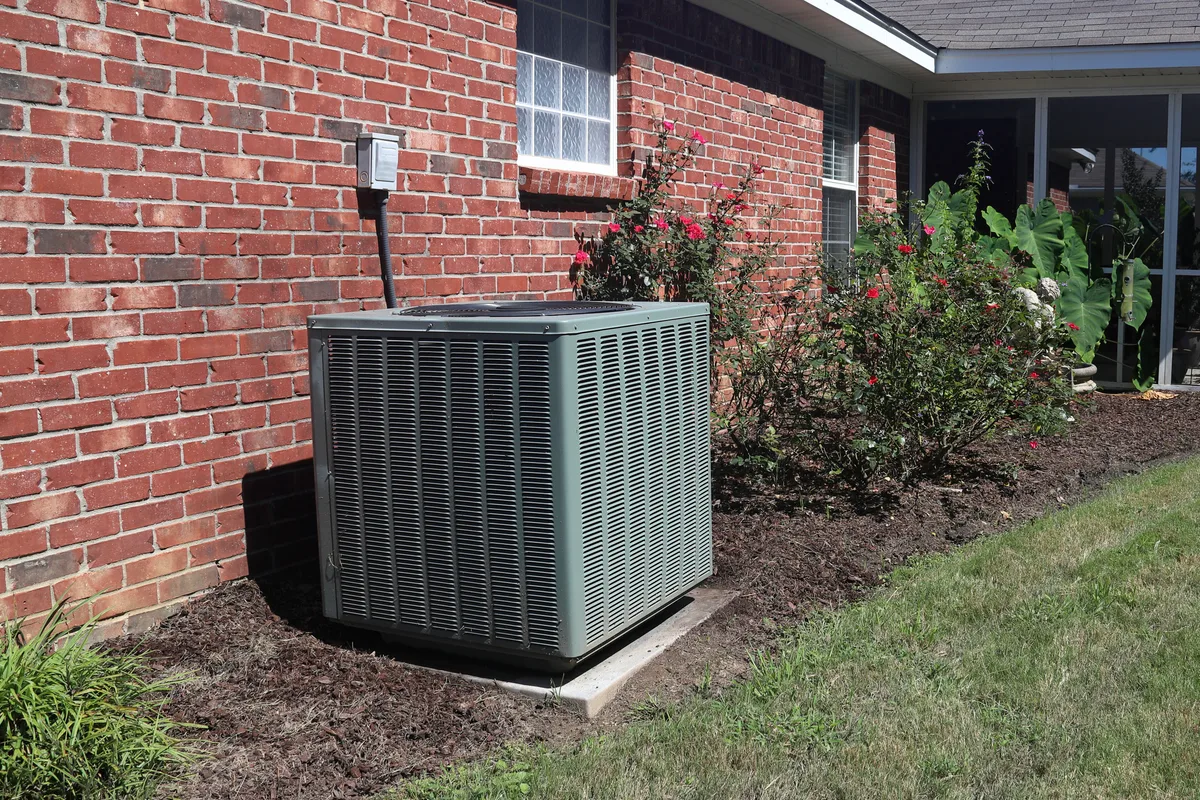
Yes, in most houses you can add central air to your existing furnace, because a central air conditioner borrows the furnace's blower and ducts to move the cold air. The job adds three things: an evaporator coil on top of the furnace, a condenser outside and a refrigerant line set between them. Whether your furnace can take it comes down to its blower, the space above it and its controls.
What the furnace must have: blower airflow, room for a coil, cooling controls
- Blower airflow of about 400 CFM per ton of cooling. A 2-ton air conditioner needs roughly 800 CFM and a 3-ton needs 1,200. A furnace chosen for a small heating load may have a blower that tops out at 2 tons, and the rating plate or model number says which.
- Room on the supply plenum. The coil sits in a cased box directly above an upflow furnace and needs roughly half a metre of height before the ductwork resumes. Under the low joists of a 1950s bungalow basement that is tight, and the sheet-metal plenum gets rebuilt to fit.
- A control board with cooling terminals. The board needs Y and G connections and a cooling blower speed, which almost every furnace from the last few decades has.
- Thermostat wiring. A heat-only thermostat often runs on two wires. Cooling needs at least four, five if a smart thermostat wants a C wire, plus a two-wire run out to the condenser.
- A drain. The coil makes water all summer, so it needs a trapped condensate line to a floor drain, or a condensate pump where there is no drain nearby.
House-side checks: ducts, return air, electrical and condenser location
Ducts sized only for heating are the usual limit in older houses. Cooling moves more air than an older furnace needed for heat, so small supply trunks and a single undersized return show up as noisy registers, a warm second floor and a coil that runs too cold. A technician measures static pressure at the furnace to see what the ducts can carry before choosing the tonnage.
Electrically, the condenser needs its own 240 V circuit on a two-pole breaker, with a disconnect switch on the wall beside the unit. That means two free spaces in the panel and spare capacity on the service; a full 100 A panel may need a load calculation or a small sub-panel. The new circuit requires an ESA notification, which the licensed electrical contractor files.
The condenser's location is not only a matter of convenience. Municipal zoning by-laws set how close it may sit to a lot line, noise by-laws limit how loud it can be at the neighbour's property, and the rules differ between Burlington, Oakville, Milton, Hamilton and Mississauga. Narrow side yards in newer subdivisions are where this causes trouble. Read the AC placement and setback rules before you settle on a wall.
When to replace the furnace at the same time
Replace the furnace with the AC when the furnace is older than about 15 years, or when its blower is too small for the coil the house needs. A new coil is matched to the furnace it sits on. Put it on a furnace with a few years left and you pay a second time to lift the coil, rebuild the plenum and recharge the system when that furnace goes. A furnace under 10 years old with an adequate blower is worth keeping.
Between 10 and 15 years it is a judgment call that turns on the furnace's condition and repair history. The fuller comparison is in replacing a furnace and AC together.
What adding central air costs in the GTA and Hamilton
- Central AC added to a house with usable ducts: $3,500–$7,500 installed.
- AC and furnace replaced in one job: typically $7,500–$11,500.
- Doing both at once, not as two separate installs, usually saves $1,000–$2,500, since labour, sheet-metal work and the electrical hookup overlap.
What moves the number inside the band is tonnage, efficiency tier, the length of the line set, plenum work and the distance of the electrical run from the panel. Every new split air conditioner has to meet the 13.4 SEER2 minimum, so the entry tier is already more efficient than the unit a neighbour bought fifteen years ago. More price bands are on the pricing page.
No current Ontario program pays a rebate for a central air conditioner on its own. If rebates matter to you, the comparison to make is a heat pump on the same furnace: it cools the same way, and it can qualify under the Home Renovation Savings Program when a participating contractor installs it with approval in advance.
A quote for this job starts with a site visit, not a number over the phone. The technician reads the furnace rating plate, measures the plenum and the return, checks the panel and walks the outside wall for a condenser location. You get a written price that states the tonnage, the model numbers and any duct or electrical work, and the installation itself is typically a one-day job.
A house with no ducts at all needs a ductless system, not central air. For houses with a forced-air furnace, ZK Mechanical's air conditioner installation covers Burlington, Oakville, Milton, Hamilton, Mississauga and the west GTA. Call (647) 801-1252 or ask for a free written quote. Buying and sizing questions are answered under cooling in the answers hub.