
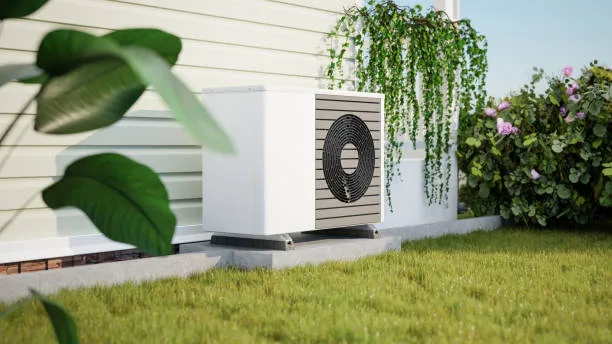
A cold-climate heat pump installed in the GTA runs roughly $6,000–$16,000 before rebates, with a typical whole-home ducted 3-ton system landing at $9,500–$15,000 and current Ontario programs returning up to $7,500. The number that decides where in that band you sit is rarely the equipment — it is whether your ductwork can carry the airflow, whether your electrical panel has room, and whether you keep the gas furnace as backup. This guide walks through each decision in the order an installer will meet it.
How a Heat Pump Still Makes Heat at -15°C
A heat pump does not create heat, it moves it. Refrigerant boiling at a temperature below the outdoor air absorbs energy from that air, the compressor raises its pressure and therefore its temperature, and the indoor coil releases it into your house. There is usable heat in air at -20°C; the machine just has to work harder to collect it.
What makes a unit "cold-climate" is the compressor. Inverter-driven models with vapour or economiser injection hold much more of their rated capacity at low temperature than the single-speed condensers of ten years ago, and manufacturers publish capacity tables at -15°C and -25°C. Ask for that table rather than a marketing phrase. Efficiency is expressed as COP: a unit delivering three units of heat for one of electricity is running at COP 3, and every cold-climate model's COP falls as the outdoor temperature drops.
The other thing it does is defrost. Frost builds on the outdoor coil in the -2°C to 4°C range typical of a Lake Ontario shoulder season, and the unit periodically reverses to melt it. That meltwater has to go somewhere, which is why the outdoor unit needs to sit on a raised stand and not on a slab at grade. Our guide to cold-climate heat pumps in Toronto winters goes deeper on defrost behaviour.
The Four Configurations and Which GTA Homes Suit Each
- Ducted whole-home air-source: the heat pump replaces or works alongside the furnace and uses your existing ductwork. Best fit for 1970s–2000s two-storeys in Millcroft, Glen Abbey or River Oaks where the duct system is intact
- Dual-fuel (hybrid): the same outdoor unit with the gas furnace kept as backup below a set outdoor temperature. The default recommendation for most Halton and Hamilton houses on natural gas
- Ductless mini-split, single or multi-zone: wall or ceiling heads fed by small refrigerant lines. The answer for pre-war brick in Old Oakville and Westdale with no ducts, for additions, and for that one bedroom over a garage
- Ground-source (geothermal): the highest efficiency and the highest installed cost, since it requires either a bore field or a large loop trench. It needs land, and a straight answer on payback before anyone signs
What Each Configuration Costs Installed
- Cold-climate ducted whole-home system: roughly $6,000–$16,000 installed before rebates, depending on capacity, brand tier and electrical work
- A typical 3-ton cold-climate installation: $9,500–$15,000, which is the band most GTA detached homes land in
- Single-zone ductless (one indoor head): $4,000–$7,000 installed
- Dual-zone ductless: $7,500–$11,000 installed; three to four zones runs $10,000–$16,000+
- Cold-climate capability on a ductless system: roughly $500–$1,500 more per zone than a standard-climate head
- Dual-fuel, if the furnace also needs replacing: add the furnace at $3,500–$7,500 on top of the heat pump
Those bands assume a straightforward change-out. Duct modifications, a longer line set, a new pad and stand, and panel work are the usual reasons a quote lands above the middle. For a fuller breakdown by system type, see what a heat pump costs in Ontario.
Electrical: The Part Most Quotes Get Vague About
Free quotes, written pricing.
A heat pump is a substantial electrical load, and in a dual-fuel or all-electric setup the backup heat is a bigger one. Before anything is ordered, someone should open your panel and do a load calculation to the Canadian Electrical Code, not glance at the main breaker and guess.
Three things commonly come up in older Burlington and Hamilton houses. A 100-amp service may not carry a heat pump plus electric backup, though it often carries a dual-fuel setup with a gas furnace fine. A full panel needs breaker space or a subpanel. And any new circuit needs an ESA authorization behind it — ask whether that permit is in the quoted price, because it is not optional and it is the record a future buyer's lawyer will look for.
Rebates in 2026: What Is Open, What Is Closed
The current Ontario program is the Home Renovation Savings Program, launched in January 2025 and delivered jointly by Enbridge Gas and Save on Energy. Cold-climate heat pumps are among the measures it supports, and across system types current Ontario rebates run $500–$7,500 depending on what you install.
Two programs people still ask for are gone: the Canada Greener Homes Grant closed to new applicants in 2024, and Enbridge's Home Efficiency Rebate Plus has ended. The federal Oil to Heat Pump Affordability program is still specific to homes heated with oil, which rules out most of the GTA. Amounts and eligibility rules change, so confirm against the program page rather than a contractor's flyer — our Ontario HVAC rebates hub links the official sources, and ZK Mechanical files the paperwork on installs we do.
What a Good Installation Looks Like
- A heat-loss and heat-gain calculation first, so the unit is sized to the house rather than to the old furnace's nameplate
- The outdoor unit raised on a stand well clear of typical snow depth, with the coil kept out of a roof drip line
- Defrost meltwater given somewhere to run that is not the walkway it will freeze across in February
- The line set properly sized, brazed under flowing nitrogen, pressure-tested and evacuated to a deep vacuum — not just "topped up" after being opened to the air
- Refrigerant weighed in to the manufacturer's charge for your actual line length, with the figure written on the commissioning sheet
- On dual-fuel, the balance point actually set — the outdoor temperature below which the furnace takes over — and explained to you, rather than left at the factory default
- Ductwork checked for capacity before commissioning, since a heat pump moves more air at a lower supply temperature than a furnace does
Verdict: Who Should Install One, and Who Should Wait
Install a heat pump if your air conditioner is at end of life anyway, since you are buying an outdoor unit either way and the heating capability is the marginal cost. Install one if you heat with electric baseboards or propane, where the running-cost gap is largest. Install one as dual-fuel if you have gas and want lower shoulder-season bills without betting the coldest week of the year on it.
Wait if your furnace is three years old and your AC is healthy — there is no efficiency case strong enough to justify scrapping working equipment. Wait if the house has serious envelope problems; air sealing and attic insulation return more per dollar and shrink the heat pump you eventually buy. For the side-by-side on operating cost, read heat pump versus furnace in Ontario.
ZK Mechanical sizes, installs and commissions cold-climate heat pumps across Burlington, Oakville, Hamilton and the wider GTA as part of our heating work, with written pricing and the rebate paperwork handled. Send us your square footage and current setup for a free assessment.
Frequently asked questions
How much does a heat pump cost to install in the GTA?
A cold-climate air-source heat pump runs roughly $6,000–$16,000 installed before rebates, and a typical 3-ton ducted system lands at $9,500–$15,000. Ductless is cheaper per zone: $4,000–$7,000 for a single head, $7,500–$11,000 for two. Current Ontario rebates of $500–$7,500 come off that depending on the system you choose.
Do heat pumps work in Toronto and Hamilton winters?
Yes, cold-climate models do. Inverter compressors with vapour injection hold a usable share of their rated capacity well below -15°C, and manufacturers publish capacity tables at specific outdoor temperatures. Ask to see that table for the exact model quoted. Most GTA homes on gas still pair the heat pump with the furnace as backup for the coldest stretches.
Is a hybrid heat pump and gas furnace better than heat pump only?
For most GTA homes on natural gas, yes. The heat pump handles the long shoulder seasons at high efficiency, and the furnace covers the handful of deep-cold days when capacity drops and electricity is the more expensive fuel. It also avoids the electrical service upgrade that all-electric backup can require in older houses.
Which heat pump rebates are still available in Ontario?
The Home Renovation Savings Program, run by Enbridge Gas and Save on Energy since January 2025, is the current provincial route, with Ontario rebates running $500–$7,500 depending on the system. The Canada Greener Homes Grant closed to new applicants in 2024 and Home Efficiency Rebate Plus has ended. The federal oil-to-heat-pump program applies only to oil-heated homes.