
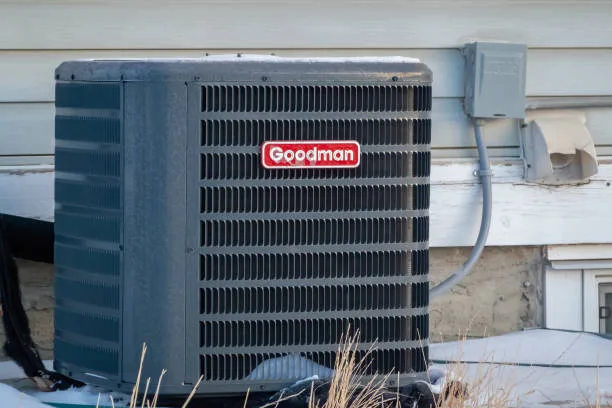
Most GTA homes need between 1.5 and 5 tons of cooling, and the honest method has three steps: start from floor area, correct for the age and envelope of the building, then confirm the existing blower and ducts can move the air that size needs. One ton is 12,000 BTU per hour. Skipping the second and third steps is how a house ends up with a large air conditioner that leaves it cold and clammy.
Step one: the starting point by floor area
- 1,000–1,200 sq ft: 2 tons (24,000 BTU)
- 1,200–1,500 sq ft: 2.5 tons (30,000 BTU)
- 1,500–1,800 sq ft: 3 tons (36,000 BTU)
- 1,800–2,200 sq ft: 3.5 tons (42,000 BTU)
- 2,200–2,800 sq ft: 4 tons (48,000 BTU)
- 2,800 sq ft and up: 5 tons (60,000 BTU)
Treat those rows as a sanity check on a quote, never as the specification. They assume an average building, average glazing and average occupancy — three things that describe very few actual houses. Our GTA AC sizing guide sets out the same table with the local adjustments beside it.
Step two: correct for the building, because square footage lies
Two houses of identical footprint in the same subdivision can need a full ton apart. A 1950s bungalow with original single-glazed windows, minimal wall insulation and a west-facing living room takes far more cooling per square foot than a 2010s build with a sealed envelope and low-E glass.
- Window area, glazing type and orientation — a wall of west-facing glass is the largest single afternoon load in most GTA houses
- Insulation levels in the attic and walls, and whether the basement is finished and conditioned
- Air tightness, which is the difference between a pre-war brick semi and a new build with a blower-door number
- Ceiling height and open-plan volume, because tonnage follows cubic metres rather than floor plan
- Shading — mature trees on a 1960s street change the afternoon load materially
- Occupancy and internal gains: people, cooking, and a home office full of equipment all add heat
A formal load calculation, the Manual J procedure, prices each of those inputs and produces two numbers: the sensible load, which is the heat, and the latent load, which is the moisture. In southern Ontario the latent half matters more than in a dry climate, because our summer air comes off the lake carrying humidity — which is exactly why a house can feel humid with the AC running.
Step three: check your blower can move the air
This is the step homeowners never hear about, and it decides more replacements than the load calculation does. A central air conditioner needs roughly 350 to 400 cubic feet per minute of airflow per ton across the indoor coil. A 3-ton system needs somewhere near 1,200 CFM to reach its rated capacity.
If your furnace blower and duct system can only deliver 900, then a 3-ton condenser will never perform as a 3-ton condenser. The coil runs colder than it should, the refrigerant returns wet, and in bad cases the coil frosts and the system shuts itself down. On older houses with a single undersized return in a hallway, opening the return side is often a prerequisite to installing the size the load calculation asked for.
Free quotes, written pricing.
What goes wrong at each end
- Oversized — short cycles of a few minutes, the thermostat satisfied before moisture has been removed, clammy rooms at 22 °C, and a compressor that starts far more often than it should
- Oversized — bigger swings between the room with the thermostat and the rooms at the end of the trunk, because the system never runs long enough to even them out
- Undersized — the unit runs continuously on the hottest afternoons and still drifts above setpoint, with high electricity use and no recovery time
- Undersized — evening relief only, which is tolerable in a spare bedroom and not in a whole house
- Correctly sized — long, steady run times on a design day, quiet operation, and indoor humidity that stays in the comfortable band without a separate dehumidifier
The counterintuitive part is that oversizing is the more common and more damaging error. An air conditioner that cools the air quickly is not doing the harder half of its job, which is wringing water out of that air, and that only happens across a long run.
Sizing a replacement is not the same as copying the old unit
The default on a replacement quote is to match whatever is sitting on the pad, which carries forward whoever guessed in 1998. If windows have been replaced, the attic topped up, or the basement finished and conditioned since then, the right size has moved — usually down after an envelope upgrade, sometimes up after finishing a basement.
Going up a size on a replacement drags other things with it. The refrigerant line set already buried in the wall was sized for the old capacity, and a larger system may need larger suction tubing to carry oil back to the compressor properly. The outdoor unit's minimum circuit ampacity rises too, which can mean a larger breaker and heavier wire back to the panel. None of that is a reason to avoid the right size — it is a reason to have it priced honestly rather than discovered halfway through the install.
Sizing also interacts with the efficiency tier. A variable-capacity system modulates down to a fraction of its rated tonnage, so it tolerates a slightly generous size in a way a single-stage unit does not — the tiers are explained in what SEER2 rating you need in Ontario. Whatever the tier, ENERGY STAR certification for a split central air conditioner starts at 15.2 SEER2 and 12.0 EER2.
The decision rule
- Ask for the load calculation in writing, with the inputs listed. A contractor who will not produce one is guessing.
- Compare it to the floor-area table above. If it is more than half a ton apart, ask which input drove the difference.
- Ask what airflow the existing blower and ducts deliver, and whether the return side needs opening up.
- Reject any quote whose only justification is the size of the unit being removed.
- When two sizes are genuinely defensible, take the smaller one on a single-stage system and the larger one only on a variable-capacity system.
ZK Mechanical runs a load calculation on every air conditioner installation across the GTA and Hamilton, checks the return side before quoting a size, and puts the numbers in writing. A typical changeover is a single day — see how long an AC installation takes — and you can book a sizing visit before the first hot week fills the calendar.
Frequently asked questions
What size air conditioner do I need for a 2,000 square foot house?
The starting point is 3.5 tons, or 42,000 BTU, but that is a first estimate rather than an answer. A 2,000 sq ft house built in the 1960s with original windows can need 4 tons; the same footprint built after 2010 with a tight envelope and low-E glass often lands at 3. Where the windows face and whether the basement is conditioned move it as much as the age does.
Is it better to oversize or undersize an air conditioner?
Neither, but if you are forced to choose on a single-stage system, take the smaller one. An undersized unit runs long and steadily and simply falls behind on the hottest afternoons. An oversized unit satisfies the thermostat in short bursts, never runs long enough to remove humidity, and leaves the house cool and damp — which most people experience as worse comfort than being a degree warm.
Can I put a bigger AC on my existing furnace?
Only if the blower and the ducts can move the air. A central system needs roughly 350 to 400 CFM per ton across the indoor coil, so going up a size on a duct system that was already at its limit gives you a bigger compressor and no extra cooling. Opening up an undersized return or resizing a trunk is often part of the quote when a size increase is genuinely justified.
How is a load calculation different from a rule of thumb?
A rule of thumb multiplies floor area by an assumed figure. A load calculation prices the actual building: window area by orientation and glazing type, insulation values, air tightness, ceiling heights, shading, occupancy and internal gains, then separates the result into sensible heat and latent moisture. In a humid Ontario summer that second number is what determines whether the house feels dry at setpoint.