
Quick answer
An HRV gets loud when something interferes with its fans or its airflow: worn motor bearings grind or squeal, ice or debris on a fan wheel thumps, a core put back wrong after cleaning rattles, a failing defrost damper clicks, and clogged filters or outdoor hoods whistle. Unplug it, clean the filters and hoods, and call if the noise is still there.
If your HRV is making a loud noise, match the sound to the part before you do anything else, because each fault has its own voice. A healthy unit on low speed is a steady, low hum that you should not hear from the floor above. Grinding, thumping, rattling, clicking and whistling each point to a different component, and two of those five are things you can fix with a sink and ten minutes.
What each HRV noise means
- Grinding, growling or a squeal that rises with fan speed: worn fan-motor bearings. An HRV motor runs most hours of the year, so its bearings wear out ahead of the cabinet and core, and on most units the whole motor is replaced.
- A rhythmic thump or wobble: ice or debris on a fan wheel. In winter, frost builds on the exhaust side when the defrost cycle is not working, which is covered in why an HRV freezes up. In summer it is insects, leaves or lint that got past a torn filter and stuck to the blades.
- A rattle or buzz that started right after cleaning: the core is seated wrong. Put in backwards, upside down or not pushed fully home on its rails, it vibrates and lets air slip around it.
- Clicking, or a hum from one corner in cold weather: the defrost damper actuator. This small motor closes the fresh-air port during defrost. A stripped gear clicks as it skips; a stalled motor hums and gets warm.
- A whistle or a louder rush of air: restriction. Clogged filters, a matted core face or a blocked screen on the outdoor hood make the fans push against higher pressure, and the air squeals through whatever gap is left.
- A drone you hear through the floor: mounting. The unit hangs from the joists on straps or chains. When a strap slips so the cabinet touches a joist, or a loose flex-duct hanger lets a duct rest on framing, the house carries the fan hum.
HRV checks you can do yourself in ten minutes
- Unplug the unit before you open the door, and wait for the fans to coast to a stop.
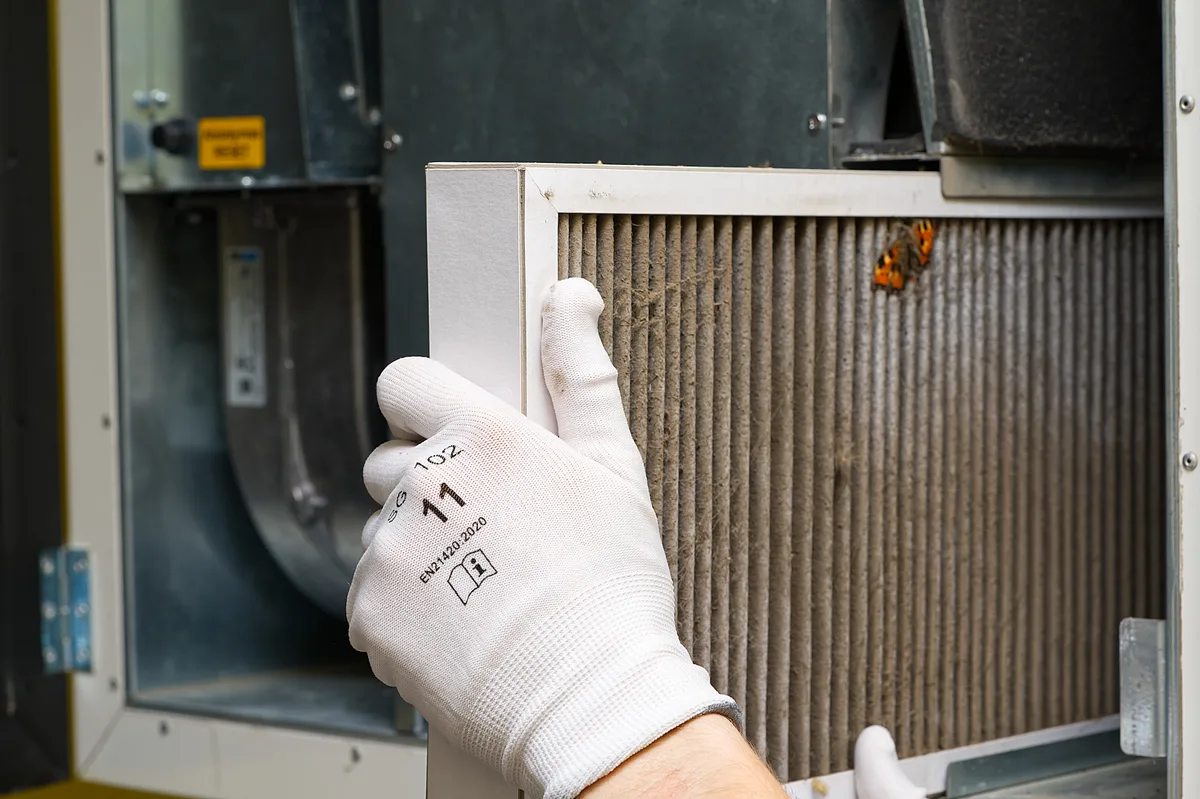
- Pull both filters, vacuum them, wash them in warm water, let them dry and refit them. Most manufacturers ask for this every two to three months.
- Slide the core out and note which way it faced. Aluminium and plastic HRV cores can be soaked and rinsed; many ERV cores can only be vacuumed, so read the label first. Refit it pushed all the way to the stops.
- Shine a flashlight on both fan wheels and look for ice, fluff or a leaf. Do not pry at the blades.
- Go outside and clear both hoods. The intake is the one with a screen, and it mats over with lint, grass clippings and snow.
- Check that the cabinet is not touching a joist or a duct and that no flex duct is kinked or stretched tight.
- Close the door until both latches catch, plug it in and listen on low, then on high.
When the noise is unbalanced airflow, not a broken part
An HRV is set up so the air it brings in equals the air it sends out, and the installer sets that with balancing dampers and a flow gauge on the day it is commissioned. If a damper has been moved, a duct has come off its collar or been crushed by storage, or one filter is far dirtier than the other, one fan ends up working much harder. You hear rushing at one hood and a whistle at the door gasket.
Balance cannot be set by ear. A technician measures both airstreams at the unit's test ports, resets the dampers and records the numbers, which is part of an HRV and ERV cleaning or repair visit.
Is it safe to keep running a noisy HRV?
Unplug it if it is grinding, thumping or smells hot; leave it running if it only whistles and you are about to clean it. An HRV burns no fuel, so switching it off creates no carbon monoxide risk. In a newer, airtight house, do not leave it off for more than a few days: humidity and cooking smells build up, windows sweat in winter, and in many of these houses the HRV is also the bathroom exhaust.
- Call when grinding or squealing continues with clean filters and clear fan wheels. That is the motor.
- Call when the clicking repeats on every defrost cycle or the unit ices up. That is the damper actuator or its control.
- Call when water drips from the cabinet or the drain gurgles, which means the condensate drain is blocked.
- Call the same day if you smell burning or the motor housing is too hot to touch, and leave the unit unplugged.
Repair the motor or replace the whole HRV?
Repair when the cabinet, core and controls are sound and the unit is under about 15 years old. Replace when the motor repair comes close to half the price of a new unit, when parts for that model are discontinued, or when the core is cracked. There is no flat price we can publish for an HRV motor, because it depends on the make and model, so the quote is written after we read the rating plate.
Subdivision houses built in Milton, Brampton, Waterdown and north Oakville over the past two decades commonly have an HRV hanging from the basement joists beside the furnace, and many of those units are now at the age where the first motor fails. The diagnostic visit is $90–$150 and comes off the bill if you approve the HRV repair.
If the unit is past saving, ZK Mechanical quotes a like-for-like swap or an ERV upgrade through our HRV and ERV installation service, balanced and documented on the day. Call (647) 801-1252 or tell us the make and the sound. More ventilation questions sit in the air quality and ducts topic.