
Quick answer
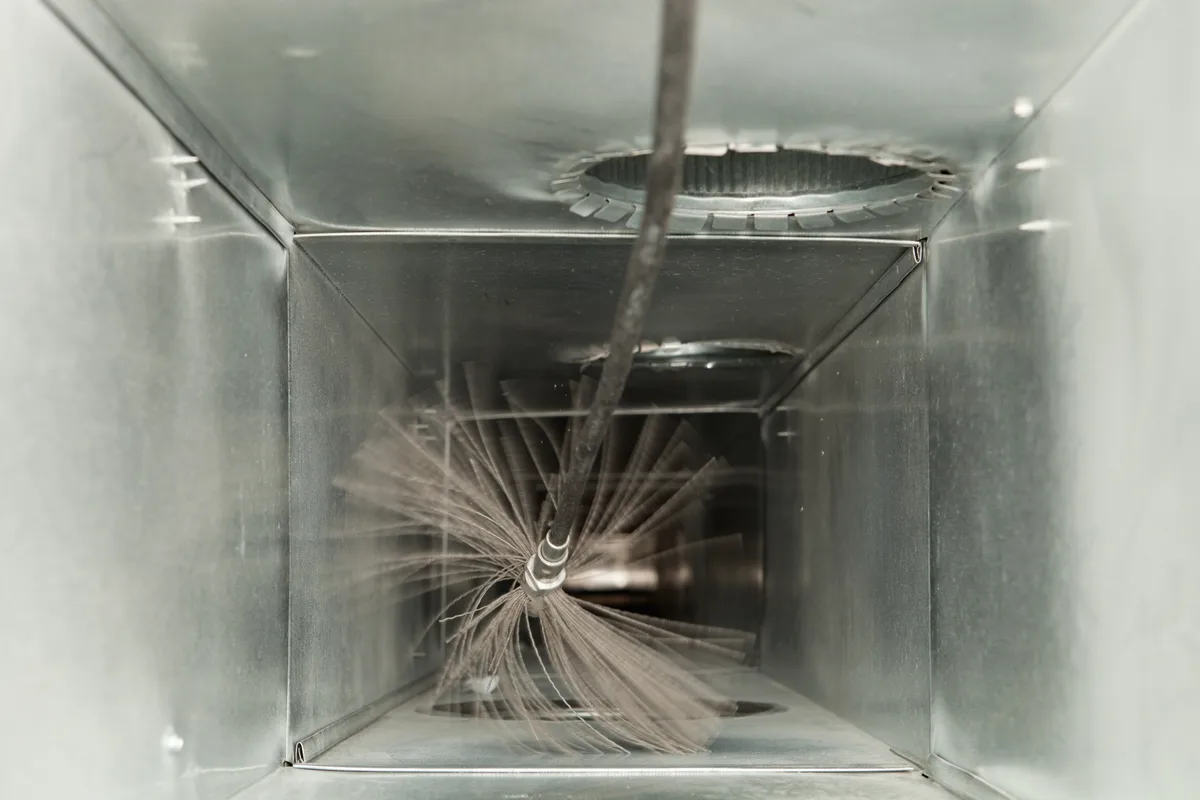
Dryer vent cleaning typically costs $100–$200 when added to a duct cleaning visit. A standalone visit is priced on the vent's length and route: a short run through a basement wall is the low end, a second-floor laundry room venting through the roof is more. You are paying for a rotary brush through the full run, the hood cleared, and the dryer's transition duct checked.
How much does dryer vent cleaning cost? Bundled with a duct cleaning, it is a $100–$200 add-on for most houses, and that is the most economical way to have it done. Priced alone, the number moves with the vent: how long it is, how many elbows it has, and whether it ends at a wall hood a metre from the dryer or on a roof three storeys up. Ask for the price in writing before the truck rolls, and ask what the visit includes.
What drives the price
- Length and route. A 1950s or 1960s bungalow in Aldershot or on the Hamilton Mountain usually has the dryer against a basement wall with a short, straight vent — the easy end. A 1990s or 2000s house in the Orchard, Millcroft or Binbrook with a second-floor laundry room often has 8 to 10 metres of duct with several elbows, sometimes through the roof.
- Termination. Wall hoods are reached from the ground; roof caps mean a ladder, a second technician and more time.
- Condition. A vent that has never been cleaned in 15 years, or one lined with foil flex that has trapped lint at every ridge, takes longer and may need sections replaced.
- Repairs. Replacing a crushed foil transition duct with semi-rigid aluminum, a broken flapper on the hood, or a disconnected joint inside a wall are extra — usually small parts.
- Condos and townhouses. Long runs to a shared shaft or a rooftop booster fan take longer and sometimes need building access arranged.
What a proper cleaning includes
- Pull the dryer, disconnect the transition duct, and inspect it — vinyl flex is replaced outright, and thin foil flex is usually swapped for semi-rigid aluminum rather than cleaned.
- Rotary brush through the entire run, from the dryer end and from outside, with a vacuum catching the lint.
- Clear the exterior hood, free the flapper, and confirm it closes so birds and cold air stay out.
- Reconnect with a proper clamp, run the dryer, and check airflow at the hood by hand — a strong, warm stream means it is clear.
- Tell you the length and material of the run, so you know whether the vent itself meets the dryer's limits.
Signs your vent needs it now
Clothes that need a second cycle, a dryer top hot to the touch, a laundry room that gets warm and humid while it runs, lint collecting on the outside hood, and a burning smell are all the same problem: air cannot leave, so heat and moisture stay in the drum. This is a safety issue as much as a cost one. The NFPA's data on home dryer fires lists failure to clean as the leading contributing factor, and the lint inside a restricted vent is the fuel.
Most dryer manuals also cap the length of the vent and count each 90-degree elbow as several feet of straight duct. A long second-floor run that was marginal when the house was built becomes a problem the moment lint starts to line it, which is why those houses need cleaning more often than a bungalow with a two-metre run.
How often, and what you can do yourself
- Once a year for most households; every six months for a large family, a house with pets, or any run over about 8 metres.
- Empty the lint screen every load, and wash it occasionally — fabric softener residue clogs the mesh.
- Check the outside hood each spring and fall: the flapper should swing freely and there should be no lint tail.
- Replace foil or plastic flex with rigid or semi-rigid metal duct; it holds far less lint and is what dryer manufacturers specify.
- If the run is over the manufacturer's limit, the fix is a shorter route or a dryer booster fan, not more frequent cleaning.
Related questions, answered briefly
- Is dryer vent cleaning included in duct cleaning? Not automatically; it is a separate add-on because it uses different tooling and a different route. Ask for it when you book.
- Can I clean the dryer vent myself? A short, straight basement run, yes, with a hardware-store brush kit. Long runs with elbows and roof caps are where the lint hides and where the brush gets stuck.
- Does a clogged dryer vent make the house dusty? It can add lint to the laundry room, and a leaking joint inside a wall dumps lint and humidity into the framing — see why a house gets dusty.
- Does a heat-pump or condensing dryer need a vent? No — they are ventless, which is one answer for a room with no realistic vent route.
ZK Mechanical cleans dryer vents on their own or alongside duct cleaning in Burlington, Oakville and Hamilton, with the price written down before we start. Book a visit and tell us where the dryer sits and where the vent comes out — that is all we need to price it.