
Quick answer
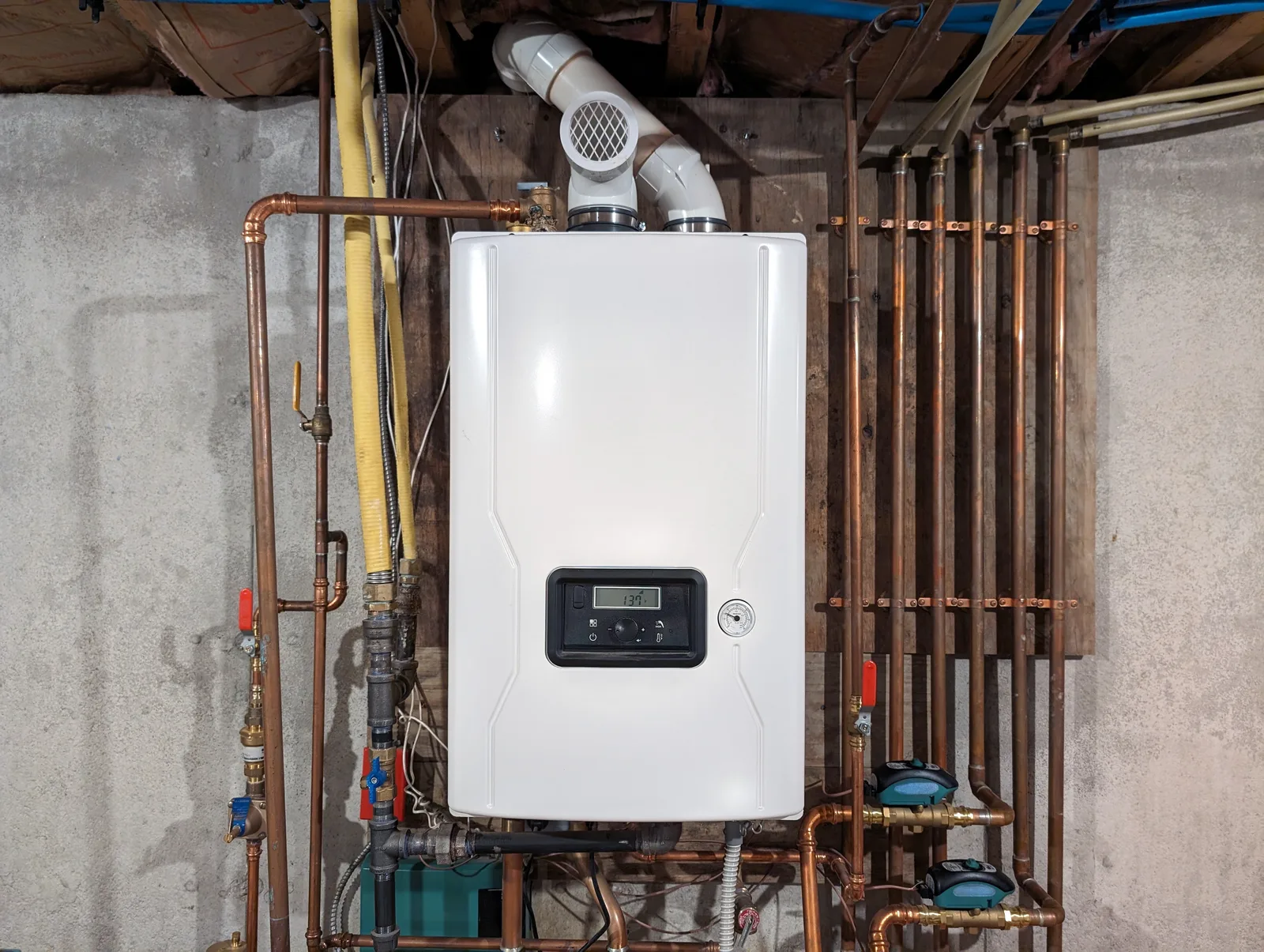
Yes — a properly sized gas tankless water heater can run a whole house, including two showers at once, in a typical Burlington or Oakville home. The limit is flow rate, not volume: a 199,000 BTU condensing unit delivers roughly 4.5–5 gallons a minute of hot water against our cold winter inlet temperatures. Homes with three-plus bathrooms and a soaker tub may need two units cascaded.
A tankless water heater can run a whole house — the real question is how many hot taps you expect to run at the same moment, because a tankless unit makes hot water at a fixed rate rather than storing it. Get that number right and a single wall-hung unit handles a four-bedroom home in Alton Village without anyone noticing the tank is gone. Get it wrong and the second shower turns lukewarm every school morning.
Tankless is limited by flow, not by how much hot water you use
A 50-gallon tank can fill a tub fast but then needs an hour to recover. A tankless unit never runs out, but it can only heat so many litres per minute. Its output depends on the temperature rise it has to produce: the colder the incoming water, the fewer gallons a minute it can lift to 49°C.
That matters here. Burlington, Oakville and Hamilton all draw from Lake Ontario, and in January and February the water arriving in your basement is in the single digits Celsius. A 199,000 BTU condensing unit — the size we install most often — delivers about 4.5–5 gallons a minute in that season, and closer to 6–7 in August when the inlet is warmer. Size for February, not August.
How much hot water does a house actually draw at once?
- Shower with a modern low-flow head: about 2 gallons (7.5 litres) a minute.
- Kitchen faucet or bathroom basin: 1–2 gallons a minute, and usually for less than a minute at a time.
- Dishwasher or clothes washer on a hot cycle: roughly 1–2 gallons a minute while filling.
- Soaker tub or freestanding tub filler: 4–6 gallons a minute — the single biggest draw in the house.
Two showers plus a kitchen tap is around 5 gallons a minute, right at the winter ceiling of one 199,000 BTU unit. That covers the morning routine in most 1970s–90s subdivision homes in Headon Forest or Glen Abbey with two full bathrooms. A 2000s-plus build in Alton Village or Joshua Creek with three or four bathrooms and an ensuite soaker tub is where the math gets tight, because a tub filler running while two people shower exceeds what one unit can deliver in winter. For the flow table by household, see what size tankless water heater you need.
When one unit isn't enough: cascading and recirculation
Large homes do not need to go back to a tank. Navien and Rinnai units can be cascaded — two units plumbed in parallel and linked by a communication cable so they share the load and both fire only when demand calls for it. Two 199,000 BTU units give you 9–10 gallons a minute in winter, enough for a tub filler and two showers running together. This is the setup we quote for larger Millcroft and Ancaster homes with four or more bathrooms.
The other upgrade worth considering in a big house is a recirculation loop, which keeps hot water close to the far bathrooms so a second-floor ensuite 20 metres of pipe away from the mechanical room does not take a minute to warm up. It does not add capacity, but it fixes the wait that many people blame on the heater.
What the house needs to support a whole-home tankless
- Gas supply: a tankless unit draws roughly five times the gas of a 40,000 BTU tank while running. Many homes need the gas line upsized from 1/2-inch to 3/4-inch or larger, which adds $400–$1,200 to the job. See whether your tankless needs a bigger gas line.
- Venting: condensing units vent in PVC through a side wall, so the unit usually mounts on an exterior basement wall rather than where the old tank stood.
- Water quality: Halton's lake water is moderately hard, and scale is the main thing that shortens a tankless heat exchanger. Plan on an annual descale flush ($150–$300) or a scale-inhibitor cartridge on the inlet.
- Electrical: a standard 120 V outlet for the controls and fan. A tankless will not make hot water during a power outage, unlike a chimney-vented atmospheric tank.
Is whole-house tankless worth it?
For a household of three or more that regularly runs out of hot water, yes: endless supply, a wall-hung unit where the tank sat, and a 15–20 year lifespan against 8–12 for a tank. The most common conversion — a mid-tier 199,000 BTU Rinnai or Navien replacing an existing tank — lands at $4,200–$5,000 installed, with $3,500–$6,500 the wider range once gas-line and venting work is included. Our tankless cost guide breaks down what moves the price.
ZK Mechanical installs and services Navien, Rinnai and Bosch tankless units across Burlington, Oakville, Hamilton and the GTA. Tell us how many bathrooms you have and whether there is a soaker tub, and we will size it for a February morning, not a brochure. Start with our tankless water heater service page or request a free quote.