
Quick answer
Less than you'd think. In Ontario, installation quality and correct sizing affect a furnace's efficiency, reliability, and lifespan far more than the brand on the box — a top brand installed badly will underperform a mid-tier brand installed right. Most major brands are reliable at a given tier and share components. Focus on a licensed installer, a proper heat-load calculation, and the warranty terms.
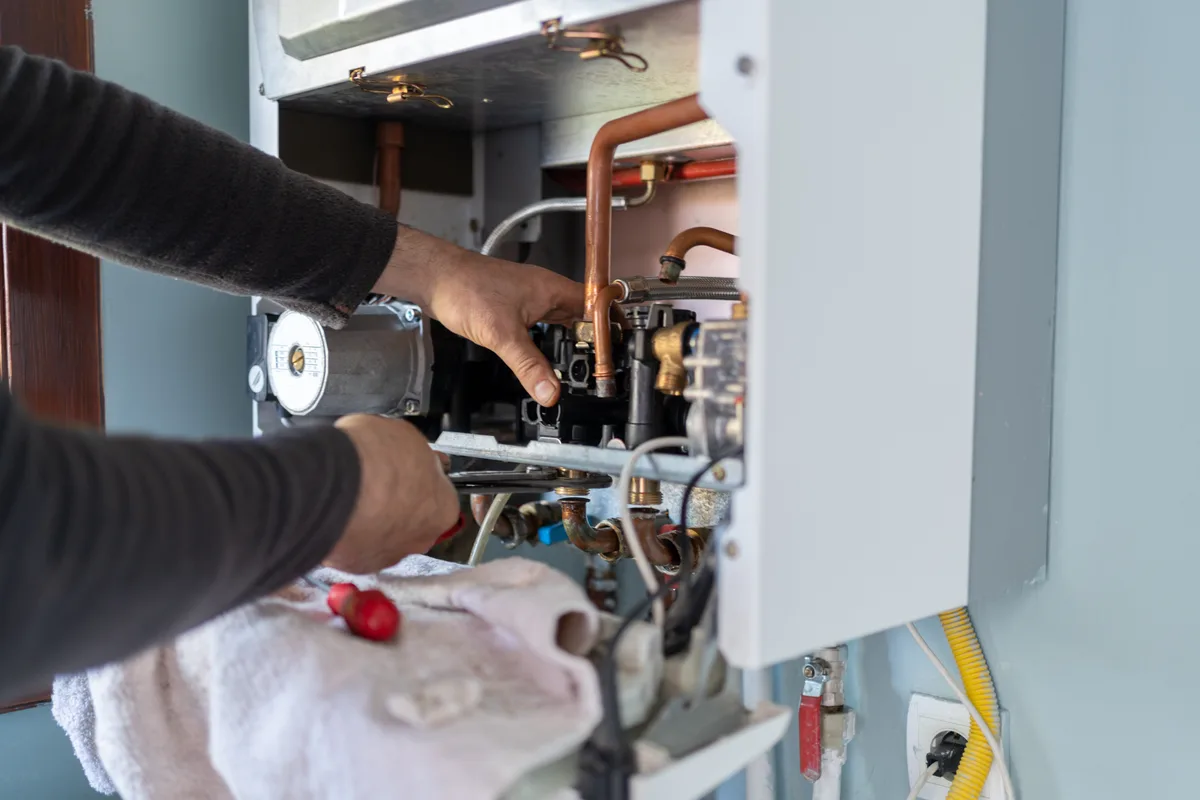
The furnace brand matters less than the installer, the sizing and the tier you buy. A high-efficiency furnace install in the GTA lands between $4,300 and $7,000, and a premium badge adds roughly $500–$1,500 over an equivalent base brand at the same tier — a smaller gap than the one between a careful install and a rushed one. Most major brands buy the parts that actually fail from the same handful of component makers, so a modulating unit from a value line will outperform a single-stage unit from a premium one in the same basement. Brand still decides warranty terms, parts availability and who can service it later.
Why installation beats brand
- Correct sizing — an oversized furnace short-cycles, wears out faster, and heats unevenly; sizing comes from a heat-load calculation, not the brand. See what size furnace you need
- Proper venting, gas line, and combustion setup — most premature failures and callbacks trace to installation, not the equipment
- Duct and return capacity — a 96% AFUE furnace on a starved return gives the comfort of a much cheaper machine, and a static-pressure reading says so before the bill does
- Commissioning — manifold gas pressure set to the rating plate, temperature rise inside the listed range, a combustion test at the end
- A top-tier brand installed poorly will run worse than a mid-tier brand installed correctly — every time
Several badges come out of the same factory
- Goodman and Amana are the same manufacturer under Daikin, sharing cabinets, boards and heat exchangers at matching tiers
- KeepRite, Heil, Tempstar and Comfortmaker come from the ICP family under Carrier, alongside Carrier's own lines
- Trane and American Standard are the same equipment wearing different badges; so are Rheem and Ruud
- Inside almost all of them the gas valve, igniter, inducer motor and pressure switch come from a short list of component suppliers, which is why a repair on one brand looks much like a repair on another
Good / better / best tiers
- Good — single-stage, ~95% AFUE: reliable, lowest cost, fine for many GTA homes
- Better — two-stage with an ECM blower: quieter, steadier temperatures, modest efficiency gain
- Best — modulating furnace with variable-speed blower: most comfortable and efficient, highest price
- These tiers exist across nearly every major brand, so you're choosing a tier and a price point more than a logo — our high-efficiency furnace guide explains the payback
Where brand does play a role
- Warranty terms — coverage length and registration rules vary by brand, and the registration window is measured in weeks after install; miss it and you drop to the shorter base term. Understanding HVAC warranty coverage has the detail
- Parts availability — a brand the local supply houses stock is the difference between a board swapped on Sunday and a three-day wait for a courier
- Communicating controls — a proprietary communicating thermostat ties you to matched indoor and outdoor equipment. A conventional 24-volt system takes parts and thermostats from anyone
- The cooling side it will be matched to — new equipment ships on A2L refrigerants such as R-32 and R-454B, so today's furnace needs a coil rated for what the condenser will use
- Whether your contractor stocks and services it — a brand your installer knows well is easier to maintain
Questions homeowners ask while comparing brands
- Is a premium brand better than a value brand? At the same tier, not by enough to decide on: both are modulating furnaces with variable-speed blowers, separated by $500–$1,500 and a badge.
- Do premium brands last longer? Lifespan in Ontario tracks maintenance, combustion setup and duct static pressure far more than the logo — see how long a furnace lasts in Ontario.
- Should I match my existing air conditioner's brand? Only if the system communicates or the indoor coil stays. On a conventional system, badges don't need to match — capacity and coil sizing do.
- Is the cheapest quote a cheaper brand or a cheaper install? Ask for model numbers and BTU capacity. Same tier at a different price means a labour, venting or permit difference — that's where corners get cut.
- Are extended warranties worth buying? Read what they cover first — labour is the expensive half of a later repair.
Our brand-neutral take
We're not loyal to a single manufacturer and you shouldn't be either. Most major brands are reliable at a given tier and share many internal components, so the honest comparison is tier against tier — single-stage, two-stage with an ECM blower, or modulating — each priced with the venting, electrical and permit spelled out. Most GTA replacements cluster at $4,500 to $6,500 once that work is included.
ZK Mechanical recommends equipment based on your home and budget rather than a brand quota, installs it to spec with licensed technicians, and backs the work with a workmanship warranty. Request a free quote for furnace installation and we'll lay out tiered options so you can choose the value that fits — not just the name.